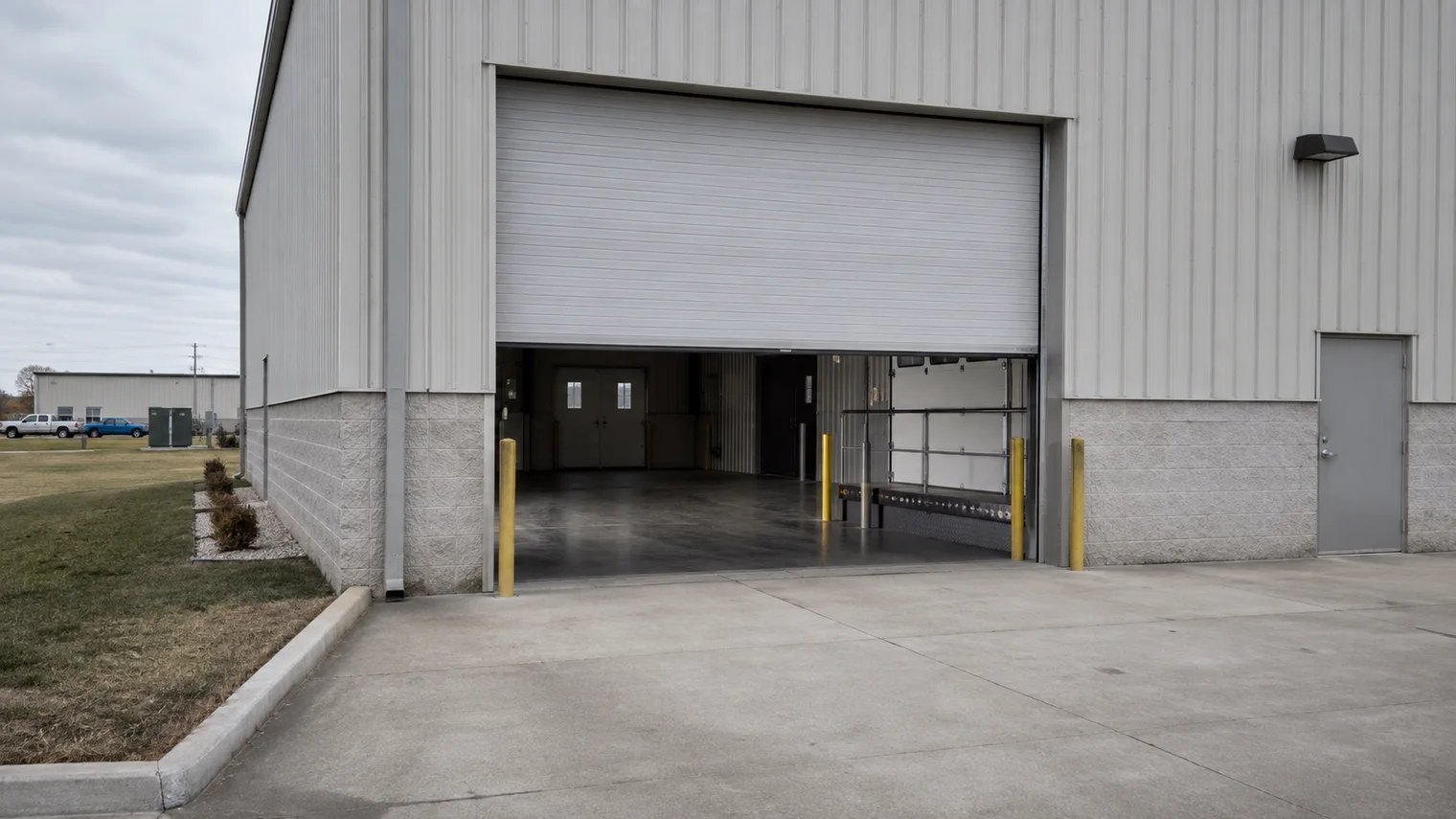
A maintenance shop earns its keep on the worst day of the year. When a pump seizes at minus twenty or a loader needs a new hose before the morning shift, the shop has to be warm, lit, drained and ready. We build maintenance shops and service bays for Casper plants, oilfield contractors and public works yards, and we build them for the days when everything else is going wrong.
These are working buildings. They need overhead doors that seal, floors that take oil and steel, power for welders and compressors, ventilation for exhaust and a safe way to lift a heavy part. Most also need a small office, a parts room and a washroom. We lay the building out so a mechanic can walk from the door to the bench without crossing a forklift lane.
Fleet-heavy owners should also read about our automotive and fleet facilities, which add wash bays and fuel. This page covers shops that serve equipment, plants and field crews.
Oilfield and refinery maintenance
Maintenance in the Casper area follows oil. Salt Creek Oil Field in Natrona County had produced more oil than any other Rocky Mountain field by 1970, about 20 percent of Wyoming's output, and it now uses CO2 enhanced oil recovery. Edgerton was created to serve the businesses supporting that field. Midwest, nearby, says new oil field industries operate there. Equipment that works in that country needs a place to be repaired close to it, and a four-hour drive each way to a distant shop makes no sense. Winter conditions on the county roads turn that drive into a safety problem as well.
Closer to town, the refinery in east Casper has a stated capacity of 30,000 barrels per day, and turnarounds draw contractors who need shop space, parts storage and a laydown yard near the fence. Our Salt Creek oil field and Edgerton pages cover the field side of the market.
What goes in a working shop
The shell is usually a pre-engineered metal frame with insulated walls and a high clear height. Inside: a reinforced slab with sealed or hardened finish, floor drains and sumps, trench drains at bay doors, overhead doors sized for the largest unit, radiant or unit heaters, make-up air, exhaust capture, lighting and a compressed air system. Bridge cranes or jib cranes need runway beams and engineered column loads.
A parts room, tool crib, restroom, break room and a small office complete the building. Welding and fabrication areas need a clear separation from fuel and parts storage, and sparks need a fire watch. For crane-rated or taller work, see our high-bay crane-ready buildings.
Hot work, lifts and ventilation
Shop safety is built in. Hot work areas have a permit and a fire watch. Welding gas and compressed air are secured. Overhead cranes are load-tested before use. Exhaust ventilation removes fumes, and fuel and solvents are stored away from ignition sources. We discuss each of these with the shop foreman before we draw the layout, because the person who runs the shop knows where the near misses happen. Eyewash, a first-aid kit, fire extinguishers and clear aisles go on the plan as fixed items, not afterthoughts.
On the build itself, the crew goes through your orientation, and we work around active repair bays when the shop is an addition. Slab saw cutting, trenching and grinding create silica dust, so we control it with wet cutting and vacuum collection. Electrical tie-ins to live panels are done by authorized personnel, with lockout, and never at the end of a shift.
Design loads and permits
The City of Casper lists climate zone 6B, exposure C, a three-foot frost line to top of footing and severe weathering, and points to the 2024 International Building Code table and the ASCE Hazard Tool for snow load. Shop buildings with large doors and long clear spans are sensitive to wind and drift, so the engineer must set the values for the actual site.
City commercial permits often need a life-safety plan, engineered drawings and Planning and Zoning approval, and an issued permit lasts 180 days. Repair garages and shops with welding or fuel may have extra fire provisions. Outside city limits, a town or county may have different rules, and Wyoming has no single statewide building code, so we confirm with the jurisdiction first.
What changes the price
Clear height and span set the frame cost. Crane capacity sets the column and footing cost. Heating sets the long-term operating cost, and in a shop with big doors it is the largest one. Slab specification matters too. A thicker, reinforced slab with a hardener costs more up front and saves repairs later.
Plan for utilities. A shop that adds welders, a compressor and a crane can need a larger electrical service than the lot has. Sewer, water and gas connections can also hit costs. We price the utility connections as separate lines so there are no surprises. Owners in metals and heavy industry typically add cranes, large doors and high-capacity slabs, and we plan the budget with that in mind.
Pieces that make the shop work
Shops depend on the slab, the yard and the frame. The industrial concrete floors trade crews build slabs for point loads, jack stands and trench drains. A pre-engineered metal building makes a cost-effective shell. Add insulation, liner panels and a crane runway and the same frame becomes a dependable shop.
Yards, laydown and parking usually follow. Oilfield contractors need a graded, drained place to stage pipe, tanks and equipment, which we build as stabilized laydown yards. Think of the shop and the yard as one system, because that is how the crew will use them. If you want a work deck over the bay for filters, hoses and parts, see our mezzanines and platforms work, which we build to the same loads and rails.
Describe the biggest thing that comes through the door
Send the equipment list, the lot and the current shop layout. We will walk the site, confirm the permit path and price the building, the slab and the yard as one package.
Common Questions
How big should the shop door be?
Size it for the tallest and widest unit that will ever enter, with room for roof equipment and mirrors. A too-small door costs far more later than an oversize door now.
Do we need a bridge crane?
If you lift heavy parts regularly, a crane saves time and reduces injuries. Crane capacity changes the structure, so decide before the frame is ordered.
How do you keep a shop warm with large doors?
Radiant heat warms floors and people, unit heaters push air, and fast doors reduce loss. Make-up air is needed when exhaust runs. We design with your mechanical engineer and review operating costs.
Can you build next to the refinery or oilfield sites?
Yes. We follow site safety rules, orientation and permits. Access routes, badging and hot work restrictions can add time, so we plan for them.
What permits does a shop need?
City of Casper commercial permits often require a life-safety plan and engineered drawings. Repair garages and welding areas can add fire provisions, and environmental rules apply to drains and fluids.