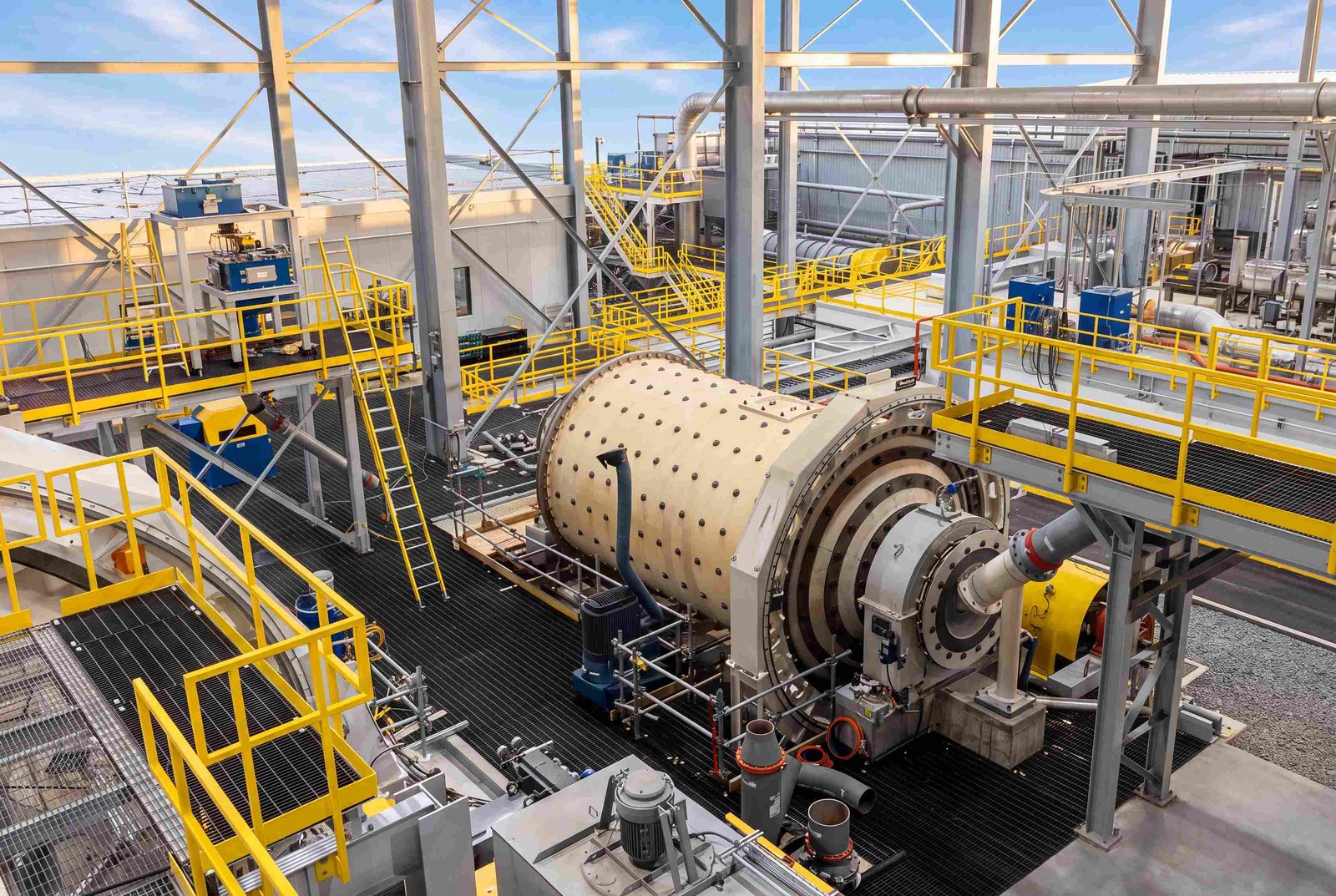
Turnaround season decides everything for a refinery owner. The unit comes down on a date, the contractors mobilize and every day over plan costs real money. We do not run the process work. We build what the process work stands on: foundations, pipe racks, platforms, laydown yards, shop buildings and the roads that carry the loads in and out.
The refinery at 5700 East Highway 20-26, with its mailing address in Evansville, has 30,000 barrels per day of capacity and runs mainly Wyoming and Rocky Mountain sweet crude. A roughly $200 million modernization reported in October 2016 put in a new crude unit to replace units built in 1928, 1948 and 1955, along with new tanks and a gas-fired heating plant. The plant then employed 145 people plus contractors. That last phrase is the market we serve: the contractors around the fence.
Heavy industry is a broader group. Fab shops, machine shops, steel suppliers, yard operators and oilfield service companies all need crane bays, laydown space and strong floors. Every one of them has a permit to work, a gate and a safety orientation. We follow all three and we plan our work around them, from the first survey stake to the last punch item.
Turnarounds, shutdowns and the day the unit comes down
A turnaround is scheduled years ahead and then compressed into weeks. Work done before the shutdown, such as new foundations, pipe supports, shop buildings and laydown yards, takes pressure off the window. We build that early work in the months before and finish clean, so the turnaround crew has a flat yard and a working road on day one.
During the shutdown, the typical contractor job is short, loud and locked down: break out an old pad, set rebar, pour, cure and release the area to the next trade. We plan concrete mixes for fast strength, bring blankets in cold weather and pour on a rolling schedule. If a pour has to wait for a gas test or a crane, we have an alternate task ready. After the window, we stay for demobilization, restoration and punch.
Safety first, and the permit to work comes before the shovel
On an operating plant, we cannot start without a signed permit to work. Hot work, excavation, confined space entry, lifting and line breaking each have their own approvals, and most carry gas testing. Our foremen attend the daily permit meeting and carry the permit to the crew. Nobody improvises.
Every worker goes through your site orientation and any process-specific training. We keep a short list of rules: stop work if conditions change, report every near miss, keep exits clear and do not enter a space you have not been cleared for. Heavy industry is hard on people and equipment; a good safety plan is the cheapest part of the job and the one that cannot be cut. Process units may also require a specific code of practice, which we follow.
Fab shops, process support and yard work
For fab shops, we build crane-served bays with runway beams sized for the lift, floors that take plate and pipe, and doors that clear the load. We frame them with structural steel erection by experienced steel crews, and we hold column tolerances tight enough for a crane rail.
For process and storage owners, we pour equipment pads, containment walls and sumps, and set drilled pier foundations for tall or heavily loaded structures. The geotechnical report is read before the rig arrives. Roads inside the fence must carry heavy-haul traffic, and we build them as such, not as parking lots.
Contaminated ground and old industrial sites
Industrial ground has history. The Mystery Bridge and US Highway 20 Superfund site at Evansville involves groundwater contamination believed to trace to former industrial operations. The former refinery property on the river, now called Platte River Commons, ran its last barrel in 1991, after opening in 1895. A citizen lawsuit led to a remedy agreement in 2002, and the site is still recovering from contamination.
That history matters for any excavation. We ask for the environmental file before we dig, set up soil and water handling plans, and stop work if we encounter odors, staining or unmarked pipe. Spoil from a regulated area has to be managed, tested and disposed of properly. Any dig in Evansville or on the Platte River Commons grounds starts with that review.
What we manage most closely
Demolition and slab removal, excavation, concrete, rebar, grade, aggregate base and pavement. For industrial demolition, we plan selective removal, utility isolation and debris handling so nothing falls onto a live line. See industrial demolition services for how we phase it.
We also set up stabilized laydown yards with geotextile, compacted aggregate and drainage, so a turnaround crew can park a crane, stack pipe and stage pre-fab modules without sinking. A good laydown yard looks plain. It saves days. We mark it, light it and gate it, and we build the access road to handle the lowboy hauling the heaviest piece.
Neighbors in the same market
Heavy industry shares the fence line with other segments. Plant owners in utilities and power face similar outage windows and permit rules. Precision shops in advanced manufacturing need many of the same building features at smaller scale. The east side of town, east Casper, mixes all of these, and its truck traffic, rail and highway access shape our planning.
When a project crosses these lines, we bring the right crews and the right safety plan for each fence. A fab shop owner who also supplies a refinery turnaround gets one site plan and two permit regimes, kept straight on one schedule.
Send us the turnaround scope
Give us the shutdown dates, the gate rules and the drawings. We will plan the early work, protect the window and show up to your safety orientation ready to follow it.
Common Questions
What can you do during a turnaround?
The civil and structural side: pads, foundations, platforms, laydown yards, roads and temporary facilities. We do not do process mechanical, piping or electrical. We coordinate with those trades, protect their work and release areas on time.
How early should we involve you before a shutdown?
Six to twelve months is common for foundations and yards that must exist before the window, and earlier for long-lead items. The sooner we see the scope, the more of it we can move out of the shutdown and into normal weeks.
How do you handle a site with known contamination?
We review the environmental file before mobilization, set soil and water handling procedures, sample as needed and manage spoil by the rules that apply. If we find something unexpected, we stop and notify. The cost of that care is much less than the cost of mishandling.
Do you build fab shops from scratch?
Yes. Crane bays, welding bays, material storage and offices. We design for the lifts you plan today and the ones you may want later, so runway beams and columns are sized with room to grow. We also lay out the yard so material flows in a line.
What does a heavy-haul road cost compared with a normal one?
Considerably more, because of the base thickness and the compaction testing. We price alternatives so you can see where the money goes. A road that fails in the first thaw costs more than a road built right.