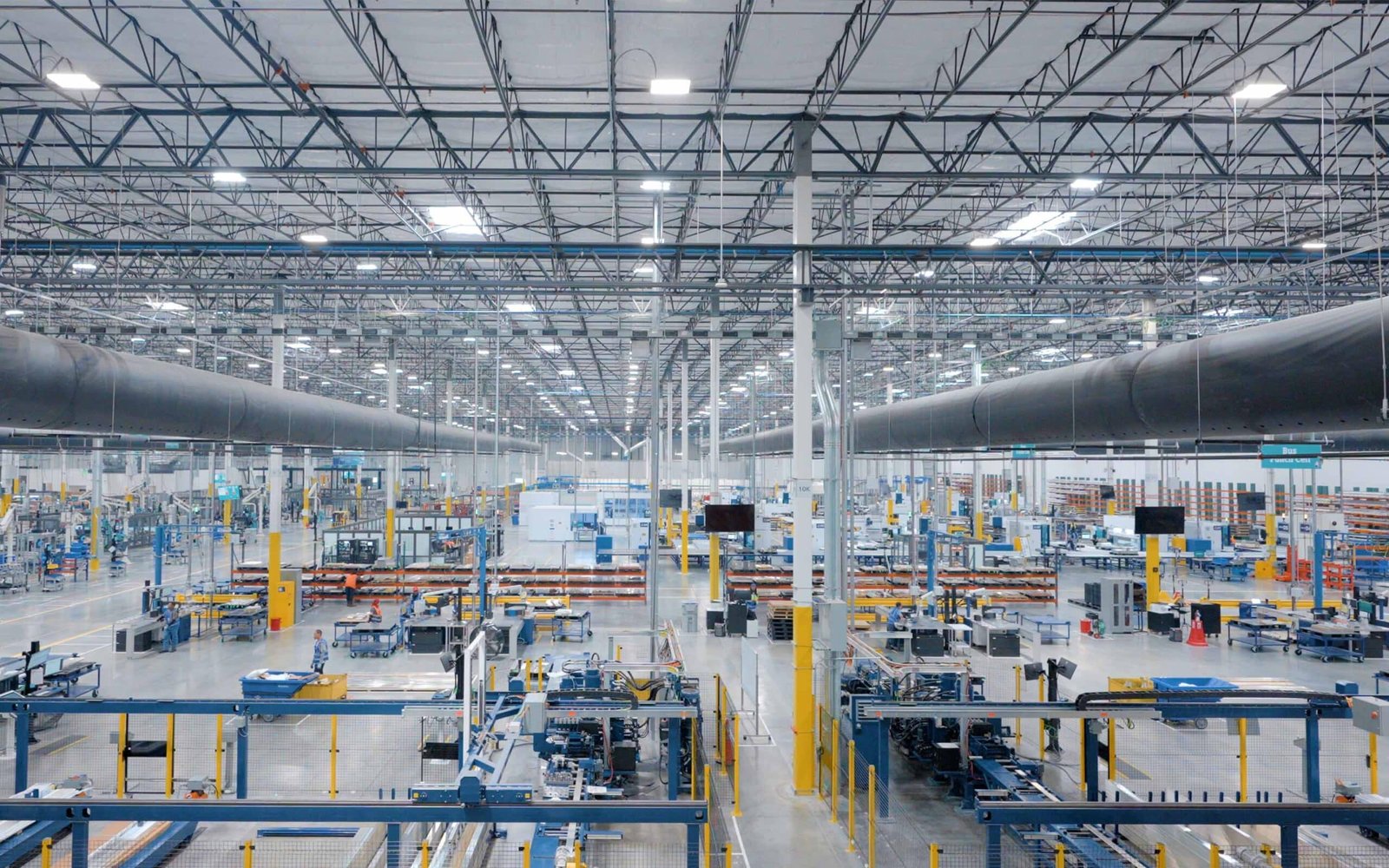
A fab hall does not stop running because a builder shows up. If you own a precision shop or a light assembly operation in Natrona County, the first thing we ask is what stays live while we work and what your permit to work rules are at the fence. Then we plan the build around those answers, not the other way round.
The business park beside the Natrona County airport holds more than 35 businesses, from manufacturing to aviation. The airport also operates Foreign Trade Zone 157, with a 492 acre magnet site at 8500 Airport Parkway. That is the nearest thing this metro has to a manufacturing campus. Other owners we talk to are in east Casper, Mills and on the Evansville side. We build in all of them.
Advanced manufacturing here usually means precision work at modest scale. A crane-served fab hall. A clean assembly bay. A coating or heat-treat room. A controlled office, a yard and a truck door. We draw the building around the process. Floor flatness, utility drops, crane rails, make-up air and laydown space all come off the equipment drawings first. We do not guess at the process.
What the metro offers a production owner
Controls, remote monitoring and plant data all ride on fiber. The Wyoming Business Council approved $617,483 in grant funding for Natrona County to install about 30,000 linear feet of fiber optic cable in and around the airport business park. If you are siting a line there, tell us early. We coordinate your conduit and pull boxes with that work so nobody opens a trench twice.
Financing matters too. The City of Casper adopted an Industrial Revenue Bond policy on December 16, 2025. It considers bonds only for projects over $2 million that create employment, expand the tax base and promote Wyoming products, and committee review takes about two months. Those two months belong in the schedule before any dirt moves. Our preconstruction work builds that sequence with you and your lender.
What we build for a manufacturing owner
Ground-up fab halls and assembly buildings, tilt-up or steel, sized to the crane and the process. Mezzanines and platforms for equipment that does not fit on the floor. Concrete work that carries the load: equipment pads and foundations poured to the vendor's tolerance, not ours. We read the machine foundation drawings line by line before the forms go up.
A bay with a bridge crane is its own design problem. Runway beam loads reach the columns and footings, and the building has to hold alignment through frost and snow load. We frame those bays with the crane vendor at the table. For the whole plant, from yard to office, we price a manufacturing plant as one package so the owner has one schedule and one person to call.
Permits, plan review and the 180 day clock
Wyoming has no single statewide building code. Cities and counties adopt and enforce their own, so the first call goes to the local building department. The City of Casper lists the 2024 International Codes and keeps its amendments in Title 15 of the municipal code. The state adopted the 2024 family on June 28, 2024. Natrona County's own edition was not confirmed in our research, so we verify it for every site outside city limits.
Casper commercial permits often require a life-safety plan, engineered building and site plan drawings and Planning and Zoning approval. An issued permit is good for 180 days, and plan review covers structural calculations, engineering reports and specifications. If your equipment is long-lead, that clock matters. We time the permit release to the equipment delivery and handle the paperwork through our permitting and entitlements coordination.
What moves the number
Equipment first. A machine with a six month lead and a foundation drawing that arrives late holds up the pour, then the steel, then the roof. We track those dates in long-lead procurement from the first week. Second is the ground. The City of Casper climate criteria list a three foot frost line to the top of footing, a 3,000 air freezing index and severe weathering. That means deeper footings, protected slabs and winter concrete practice from late fall on.
Snow load is not a fixed number in Casper. The city points designers to the 2024 International Building Code table and the ASCE hazard tool, so the roof design comes from the project, not a rule of thumb. Crane capacity, floor flatness and finish, and the distance project teams and suppliers travel each add cost. We show those line items separately so you can see which ones respond to a change in scope.
Work that goes with the building
A plant is a building and a yard. Trucks need truck courts and trailer yards. Raw stock and finished goods need somewhere to sit, which is why we build stabilized laydown yards that stay passable in March mud. Floors that hold a forklift under a loaded rack are industrial concrete floors, not parking-lot slab.
Manufacturing buyers also overlap with other segments we serve. A shop that fabricates for the refinery side has the same crane and yard needs as metals and heavy industry owners. A plant that ships by truck shares dock and apron design with logistics and distribution operators. We bring lessons across those lines, and we tell you when a spec from one does not fit the other.
Send us the equipment list
Tell us the process, the equipment lead times and the site. We will return a build plan that starts with your permit to work rules and ends with a turnover your maintenance crew can run. Call or send drawings and we will schedule a safety orientation and a walk of the site.
Common Questions
Can you build next to an operating line without stopping it?
Yes, if the phasing is planned before the first mobilization. We set barricades, haul routes and a hot-work plan with your safety lead, and we keep the permit to work as the rule for every crew. Noise, dust and vibration limits go in writing. Anything that touches your live utilities is scheduled for a planned shutdown window, not squeezed in on a weekday.
How early should we involve you if equipment has a long lead?
As soon as you have a preliminary equipment list. Foundation loads and anchor bolt layouts come from the vendor, and slab thickness, crane runway design and utility routing all depend on them. A pour can sit idle for weeks waiting on one drawing. Early involvement also lets us line up the permit so its 180 day window opens near the delivery date, not months before.
Does the foreign trade zone change how we build?
It does not change the building. It affects how you handle imported inputs and finished goods, and that is a decision for you and your customs advisor. Where we help is physical: a secure, fenced receiving area, a clear truck route and a dock position that suits inspection. Tell us what the zone designation needs from the site and we draw it in.
What happens to the schedule in winter?
Concrete and masonry slow down, and steel erection stops on high-wind days. We plan footings and slabs for the warm months where we can, and enclose the building before deep cold arrives so interior trades keep moving. Winter pours use blankets, heated enclosures and mix adjustments. Shutting down is sometimes cheaper than protecting one pour, and we will tell you which case you are in.
Will the county or the city review our plans?
It depends on the parcel. Inside Casper, the city building and fire department reviews and inspects. Outside city limits, the county or the town of Mills, Evansville or Bar Nunn may hold the authority. We confirm this before design is final, because the adopted code edition and amendments differ by jurisdiction in Wyoming.