Eighteen tracks and 19,000 feet of yard sit on about 250 acres northeast of the Casper airport. That yard takes drop-offs and pickups from the main-line railroad, loads and unloads, stores cars and assembles 100-car unit trains. If you move freight through this metro, that is the system you plug into, and we build the ground on either side of it.
Logistics owners here are not running a coastal port. They are moving bentonite, barite, refining products, oil and gas supplies, wind-energy components, fertilizer, wood and construction materials, plus a rebar project. Loads are heavy and awkward. Drivers come off a state highway into a yard that has to carry loaded tractor-trailers in January. We design for the loaded axle, not the empty one.
We build truck courts, dock aprons, trailer yards, transload pads and the warehouses beside them. We schedule the work so your trucks keep rolling, and every haul route, flagger and laydown area is written into a permit to work. Visitors and drivers do not wander through our work area. Every trade partner takes your site safety orientation before starting physical work.
Rail, highway and the foreign trade zone
The Casper Logistics Hub is listed at 984 acres at 6 Mile Road and Commerce Street and is Magnet Site 2 of Foreign Trade Zone 157. A second magnet site of 492 acres sits at the airport, and the zone boundary covers nearly all of Natrona County. For owners handling imports or exports, that matters for where you put a receiving yard and how you secure it.
The road network is simple and works for you. Interstate 25 carries through traffic. US 20, 26 and 87 leave the interstate at Beverly Street and run east along Yellowstone Highway toward Glenrock. North of town the interstate has exits at Wardwell Road, Westwinds Road and Ormsby Road. Parcels near those interchanges give trucks a short run to the main road, and the north I-25 corridor is where we start looking.
What we manage most closely
Grading, subgrade stabilization, aggregate base, concrete flatwork and underground utilities are work we manage most closely. For a logistics yard those are the pieces that decide whether the surface lasts. Poorly compacted subgrade under a trailer pad fails in the first spring thaw. We test, proof-roll and fix it before paving or pouring.
We build heavy-haul access roads for oversize loads and oilfield service trucks, and dock aprons and loading zones in reinforced concrete so landing gear does not punch through. Trailer yards get a stabilized base and drainage that moves water to a detention area, not onto the neighbor. When a rail connection is in play, our rail spur site improvements cover the grading, drainage and crossing surfaces around the track, while the track itself follows the railroad's own standards.
Keeping freight moving while we build
Most logistics owners cannot close. We phase the work by zone: build the new dock apron while trucks use the old one, tie in at night, switch over on a Sunday. Every phase has a traffic plan, a named flagger and a barricade layout your yard staff have approved. We hand over each phase with a punch list and a walk.
The rail yard handled about 500 cars a month in peak years, and the current figure is about 150. That tells us volumes swing. We design buildings with expansion in mind: column bays and slab edges that accept a future addition, utilities sized for the second phase, and a yard layout that leaves room for trailers. Building the first phase too tightly is the most expensive mistake an owner can make. E-commerce fulfillment owners ask for the same thing.
Building types that follow the freight
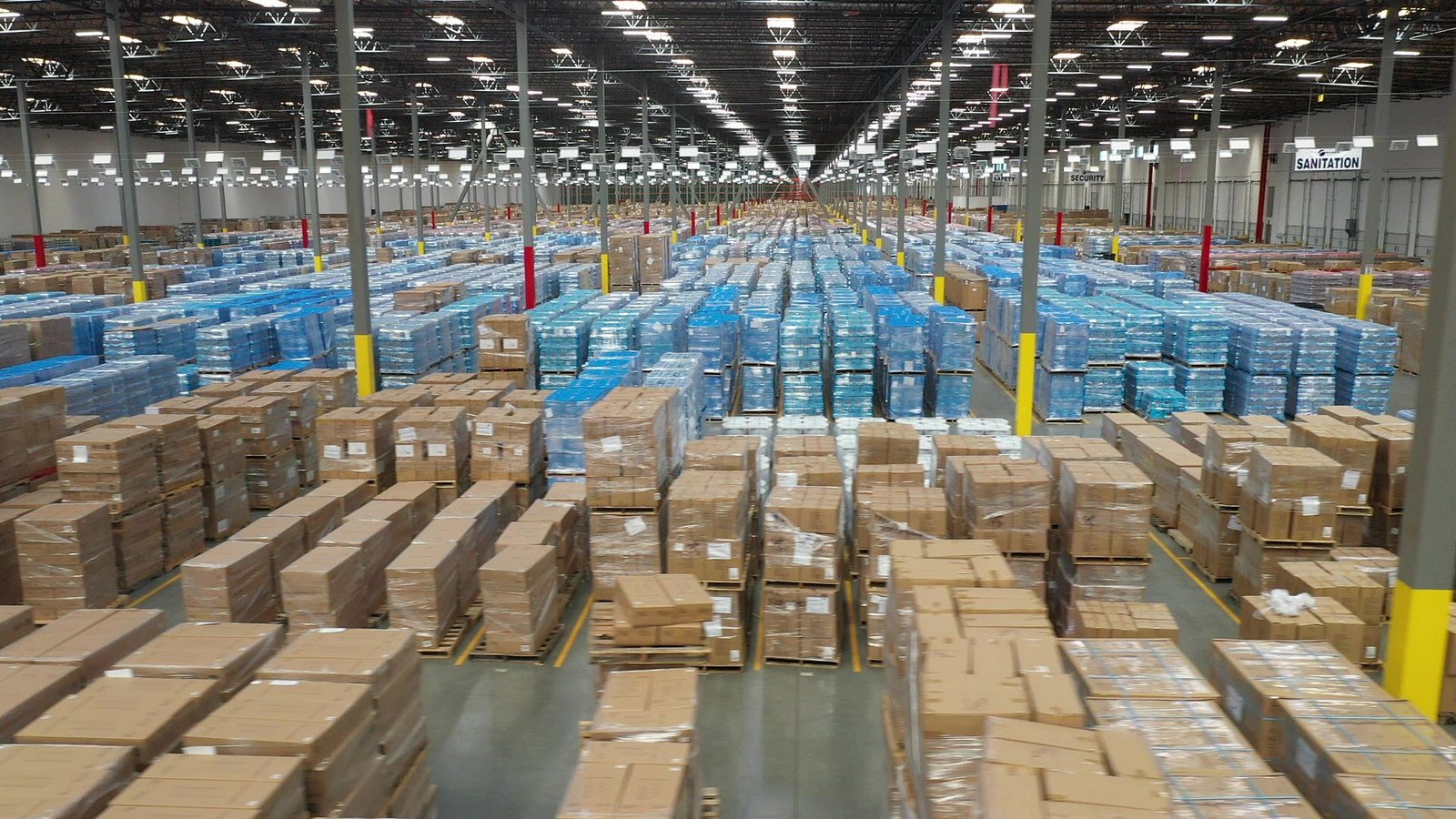
A distribution center is the obvious one. A truck terminal or cross-dock is another, with doors on both sides and a flow plan that keeps forklifts away from trucks. Smaller shops, trailer repair bays and parts warehouses support these terminals, and we build them as one site with the same team.
Fleet owners, including oilfield service fleets and construction haulers, also look to automotive and fleet buildings for service bays and wash bays. Their needs overlap with ours on slabs, drainage and oil separators. We bring that cross-over to every job, and we say when a spec from one world should not be carried into the other.
Safety around trucks and track
Our first rule is separation. Pedestrians, trucks, rail cars and construction equipment each get their own route, marked and enforced. Anything that crosses a track needs the railroad's written approval, and we do not start until we have it. Lockout on utility work, confined space entry in storm structures and a daily toolbox talk are routine.
Wyoming has no single statewide building code, so your local jurisdiction sets the plan review. A Casper commercial permit often calls for engineered site plan drawings, a life-safety plan and zoning approval. Permits last 180 days. We pull them in sequence with your phases, and we keep inspection records current so the fire marshal can sign off without delay.
Send us the truck count
Tell us the loads, the doors and the yard. We will return a phased plan that keeps trucks moving, with a haul route, flagger plan and permit to work for every phase.
Common Questions
Can you build a transload pad next to the rail yard?
Yes, with the railroad's input. The pad, the aprons and the drainage are our scope. The track and any crossing follow the railroad's own design and approval process. We bring the surveyor and the geotechnical engineer in early so the pad elevation, the track elevation and the drainage all agree.
How thick should a trailer yard section be?
It depends on your loaded axle weights, the subgrade and the drainage, so your engineer should set it. In general, a trailer yard carries more load on a smaller footprint than a car lot, and landing gear loads need reinforced concrete at the parking stalls. We price a few alternatives so you can see the life-cycle cost, not just the first cost.
What does winter do to a logistics site?
Frost heave, thaw softening and drifting snow. The City of Casper lists a three foot frost line and severe weathering, so base courses are deeper and drainage is more important than it would be farther south. We grade to shed water and leave space for snow storage so plowing does not bury the dock doors.
Is it cheaper to build near the interstate?
Often the ground is more expensive, but trucking time is lower and permits can be simpler. Parcels near the hub offer acreage; parcels near town offer shorter utility runs. We run the numbers on each candidate parcel and show total cost, including utilities, access and haul.
Can you add on to an existing warehouse while it runs?
Yes. We stage the addition from the outside, cut the shared wall during a planned shutdown and test fire protection before opening. Product protection, dust control and a daily coordination meeting with your warehouse manager keep inventory safe.