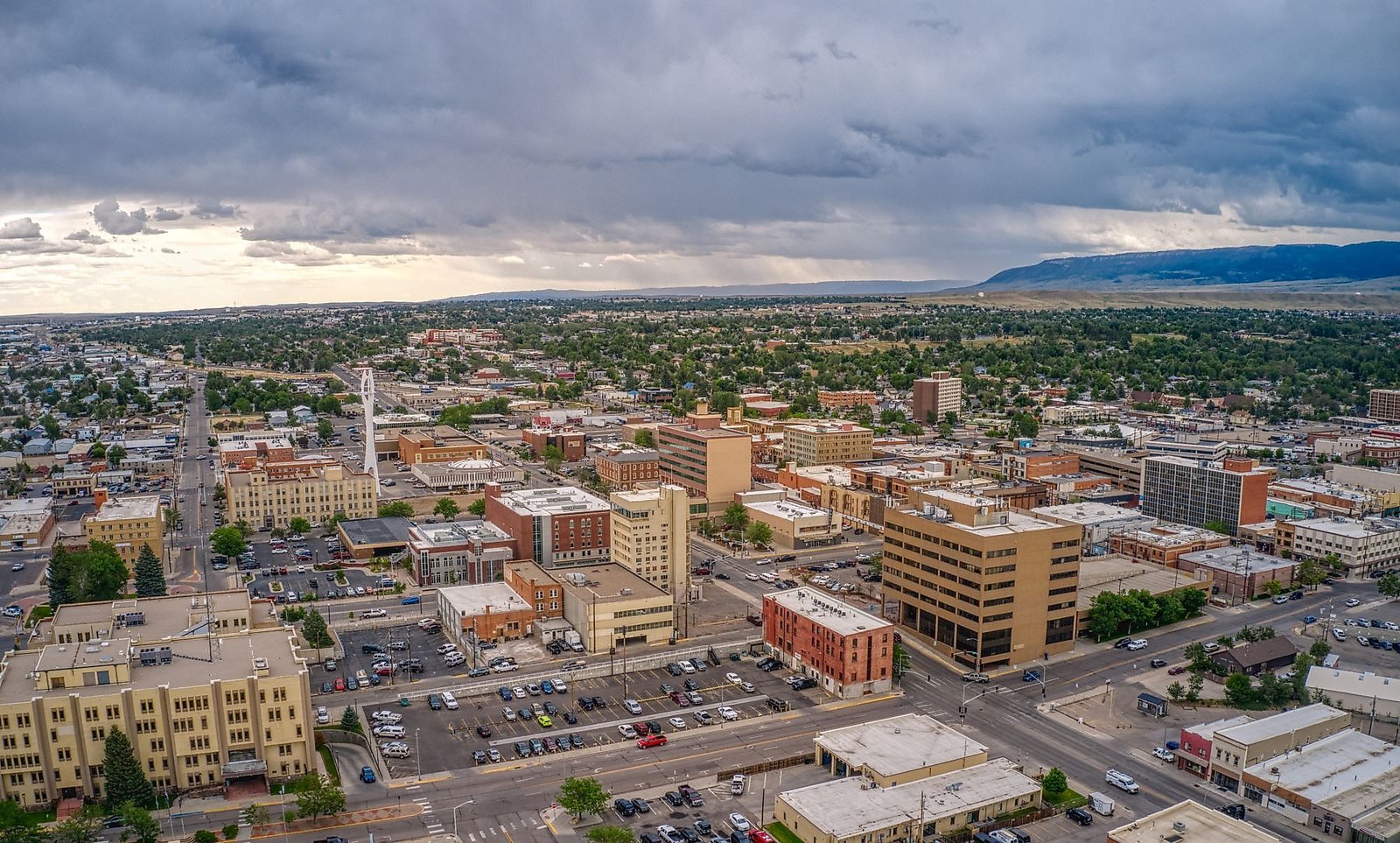
Infill is slow work done in small spaces, and downtown Casper rewards a contractor that plans every truck move. We handle industrial and light-industrial work inside the core and the Old Yellowstone District: shop renovations, tenant improvements, selective demolition, small additions and yards that squeeze onto tight lots.
The Old Yellowstone District is the city's urban renewal area next to downtown, governed by the 2002 Casper Urban Renewal Plan, a 2007 Redevelopment Master Plan, an updated 2016 plan and a form-based code. A form-based code sets what a building must look like at the street, so the facade, setback and entry are part of the design from the first sketch.
Downtown work means pedestrians, neighbors and tight alleys. We run it with fences, flaggers, sweepers and a daily plan for deliveries.
Small sites, short deliveries
On a downtown lot there is rarely a laydown yard. Materials arrive on the day they are needed, in loads sized to the alley, and they go straight into the work. We build a delivery schedule with the supplier, mark the unloading zone, and use a crane or a telehandler that fits the site. If we need a street closure, we apply early and notify neighbors.
We also look at the building next door. Excavation near an older foundation needs shoring and a condition survey before the work, with photographs and crack monitors where the neighbor allows. A survey costs little and answers questions about damage before they become disputes.
Hoisting is the other puzzle. A downtown shop with a mezzanine or a new rooftop unit may need a crane picked from the street, which means a permit, a closure and a lift plan with ground protection. We plan the pick so it happens on a quiet morning, and we have the traffic control in place before the crane arrives.
Code, zoning and incentives
Within the Old Yellowstone District, form-based code (OYDSPC zoning) governs how a project meets the street. In the rest of the city, the 2024 International Codes apply with amendments in Title 15, and commercial permits often call for a life-safety plan, engineered drawings and Planning and Zoning approval. We work with your designer to settle which rule set applies before anyone pays for drawings.
Financing matters too. The City of Casper Industrial Revenue Bond policy, adopted by City Council on December 16, 2025, considers bonds only for projects over $2 million that create employment, expand the tax base and promote Wyoming products, with committee review taking about two months. If you plan a larger industrial project, we help build the budget and schedule that review will need.
We keep one more thing in view: the plan reviewer wants to see the structure, the fire separation and the exits on paper. For older buildings the existing building rules can change what a renovation must correct, so we pull the existing drawings early, or measure the building when none exist.
Work that fits downtown
The jobs we see most are industrial renovations and modernization, industrial tenant improvements and office buildouts attached to shops. We strip a space to the frame, correct the structure if needed, run power and data, install new floors and make it ready for a tenant.
Some buildings need to come down first. Our industrial demolition services cover careful removal in occupied streets: dust control, hand work near party walls, salvage where it has value and clean haul.
Downtown traffic and event calendars
David Street Station, the downtown plaza on the edge of the Old Yellowstone District, opened its first phase in August 2017 with a large performance stage, a synthetic turf lawn and vendor areas, and was planned to add a splash pad, an ice rink and a maintenance building. Events there put crowds in the streets, so we check the calendar and avoid big deliveries or lifts on event days.
I-25 Business serves downtown, splitting from the Interstate at the junction where US 20, 26 and 87 leave I-25 at Beverly Street (exit 186) and rejoining at exit 188A, where WYO 255 runs south on Center Street. Trucks use those routes, and we plan arrival times to avoid peak traffic.
Cold mornings and winter ice matter on tight streets too. We keep sidewalks clear and salted, protect the public walk with covered passage when overhead work is above it, and move material early in the day when the street has room. A schedule that respects the street keeps the neighbors on your side.
Who needs downtown industrial work
The owners we meet downtown are energy-service firms with small shops, fabricators who use older buildings, suppliers and contractors who need an office and a storage bay in one place. Some want to modernize an older building, others want a new structure on a vacant lot. Each wants limited downtime.
We support metals and heavy industry tenants who need power and floor strength in an old frame, and advanced manufacturing users who need clean power and controlled spaces. We check floor loads, electrical service and fire separation before we agree to a lease space, and we tell the tenant when the building is the problem.
Others come to downtown for visibility and access. A company that wants a showroom and a service bay in one building values the office building style frontage next to a working shop. We build that blend with a finished entry and a robust back of house.
Have a downtown building to fix or fill?
Send the address and the plan. We will walk it and tell you what we see. For a larger site outside the core, see Platte River Commons or the Wyoming Medical Center campus.
Common Questions
Do you build new industrial buildings downtown?
Occasionally, on infill lots with the right zoning. Most of our downtown work is renovation, tenant improvement or addition. We check zoning and form-based code first because the facade rules may drive cost.
How do you protect neighbors during demolition or excavation?
We survey adjacent buildings, install shoring where needed, control dust with water and covers, and limit noisy work to agreed hours. We also give neighbors a contact number and answer it.
Is an industrial revenue bond something I can use?
The city policy considers bonds only for projects over $2 million that create employment, expand the tax base and promote Wyoming products. Committee review takes around two months. Ask the city first, then we help with the schedule and the budget.
What is the biggest risk when renovating an older building?
Hidden conditions: deteriorated framing, old utilities, asbestos or lead paint, and concrete that is weaker than assumed. We open up the building early in the work, test where needed and carry an allowance so a surprise does not stop the job.
Can my shop stay open during renovation?
Sometimes. We split the building into zones, build dust walls and keep power and egress open. It costs more than an empty building, but it keeps your income going.