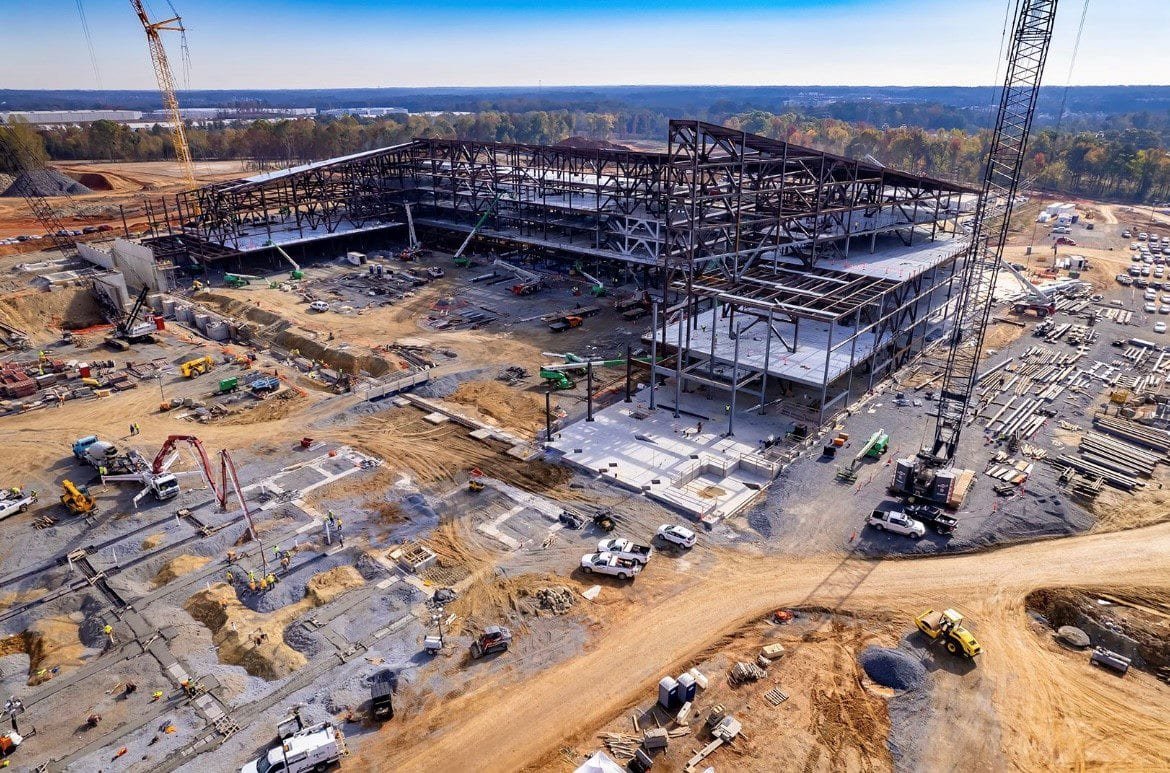
About 750 tons of structural steel went into the four-story West Tower at Wyoming Medical Center, which topped out in June 2013 next to an occupied hospital, with sky bridges tying it to the existing building. That job shows what steel erection in Casper can ask of a crew: heavy picks, tight sites, live neighbors and a short window to get the frame up.
We erect structural steel for industrial owners: plant buildings, fab shops, pipe racks, equipment structures, crane runways, mezzanines and the frames that sit under process units. The steel comes from your fabricator. We take delivery, set it, plumb it, bolt it and weld it, and hand a stable frame to the next trade.
Steel erection is a safety job first. Falls and dropped loads kill people. Every pick starts with a plan.
Lift plan, sequence and stability
A lift plan names the crane, the pick weights, the radii, the rigging, the ground under the crane and the people in the exclusion zone. We prepare it before the crane arrives and review it with the operator and the foreman. Heavy or critical picks get a second review. Wind limits are set and respected. If the load chart says no, the answer is no.
Erection sequence protects stability. Columns are set on leveled base plates and anchor rods, plumbed and braced before beams are hung. Bays are closed with bracing, joists and deck as the frame rises, so the structure never stands in a condition the engineer did not allow. Connection bolting follows the specified pretension method, and field welds are made, inspected and recorded by qualified welders. Anyone can ask us to stop for a concern.
Fall protection and controlled zones
Federal steel erection rules govern connectors, fall protection, decking and column stability, and we build the work plan around them. Workers tie off at the heights the rules and the owner require. Controlled decking zones limit who is on the deck during placement. Perimeter cables and nets protect edges. Overhead work goes on a schedule so nobody stands below a load.
Inside an operating plant the hazards stack up. Steel overhead pipe racks sit over live lines, so we plan picks outside process hours, close areas below, and use tag lines to control loads. The owner's permit to work lists the hazards and the isolation points. Every crew member attends the safety orientation. Near energized lines, we measure clearance, appoint a spotter and stop the crane if the boom enters the zone.
Steel hauls, routes and Casper geography
Fabricated steel reaches Casper on trucks. US 20, 26 and 87 leave I-25 at Beverly Street and continue east along Yellowstone Highway toward the refinery district, a route that carries oversize loads. Wyoming Boulevard has an interchange at exit 185. We check route, bridge clearances and turning paths before steel is shipped, and we coordinate delivery times with the plant so trucks do not arrive during shift change.
In the east Casper industrial area, steel work often means support structures in and around a refinery with a 30,000 barrel per day capacity, where new equipment, platforms and pipe racks are added during planned outages. Storage and laydown space is tight, so deliveries are sequenced and steel is picked from the truck where possible. Where we need space, a stabilized laydown yard next to the site keeps pieces organized and off the ground.
What we erect
Our scope covers base plates and anchor rod verification, column erection, beams, girders and joists, bracing, metal deck, shear studs, stairs, ladders, handrails and miscellaneous metals. We also install crane runway beams and rails to the alignment tolerances the crane manufacturer asks for. For multi-level structures, we set platforms and catwalks, working with the work covered under mezzanines, catwalks and platforms.
Before we start, we survey the foundation. Anchor rods that are out of position, short or low cause delays that no crew can recover. We check them against the shop drawings, correct deviations with the engineer's approval, and set shims and grout so the steel starts level. At the end, we survey the completed frame, fix punch items and release it for the next trade.
Fabrication, delivery and erection windows
Steel is bought months ahead. Fabrication slots, mill orders and shipping affect the date the first column can be set. We ask the fabricator for a delivery sequence that matches erection, so the first pieces on site are the first pieces set. We also hold space for a re-delivery when something is bent or wrong.
Erection windows are short on turnarounds. We pre-assemble where possible, sequence picks to minimize crane moves and run a daily plan with the owner. In winter, snow and ice affect footing, rigging and decking, and a crane on a frozen pad needs checks. We shovel, sand and wait when the conditions call for it, because rushing steel in bad conditions is a bad bargain.
Steel with the rest of the structure
Steel erection does not stand alone. Piers and pads come first, and we coordinate with drilled piers and equipment foundations. Steel joins tilt-wall roofs, metal building frames and high-bay structures, as in high-bay crane-ready buildings. For heavy industrial owners, these pieces often move together on one schedule.
We keep the survey control the same through the whole structure, so a column set on a pier lines up with the crane rail overhead. One team and one set of control points beat three crews arguing about who is off.
Codes and inspection
The State of Wyoming adopted the 2024 International Codes on June 28, 2024, and its administrative rule 041-1 incorporates the 2024 International Building Code, the 2024 International Fire Code and the other 2024 editions. Local governments adopt and enforce on their own timeline, so the edition in force on your site is the local jurisdiction's call. We confirm it before steel is detailed.
Special inspection of bolting, welding and connections is common, and so is steel shop inspection. We keep the paperwork: mill certificates, bolt lot records, welder qualifications and inspection reports. They go in the closeout package, and some owners need them for insurance or operating permits.
Send the shop drawings and the shutdown window
Share the erection drawings, the delivery schedule and the access. We will prepare a lift plan, price the work and schedule it inside your window.
Common Questions
Do you supply the steel?
Usually the owner or design team buys fabricated steel from a fabricator, and we erect it. We can coordinate purchase if you prefer one point of contact. Either way, delivery sequence and shop drawings should be agreed before the first pick.
How do you handle erection inside an operating plant?
With the plant's permit to work, defined work zones, closed areas under lifts and picks scheduled outside process hours. Lift plans are reviewed with the operations lead before the crane arrives.
What crane do I need?
It depends on the heaviest pick, the radius and the ground. We prepare the lift plan and select the crane and pad, or review the crane contractor's plan. Wind limits apply to both.
What if an anchor rod is in the wrong place?
We report it immediately. The engineer decides whether to adjust the base plate, drill and epoxy a new rod or modify the connection. Field fixes without approval are not allowed.
How long does erection take?
It depends on the weight, the piece count and the site. We give a day-by-day sequence once we see the shop drawings. Weather and deliveries are the usual sources of delay.