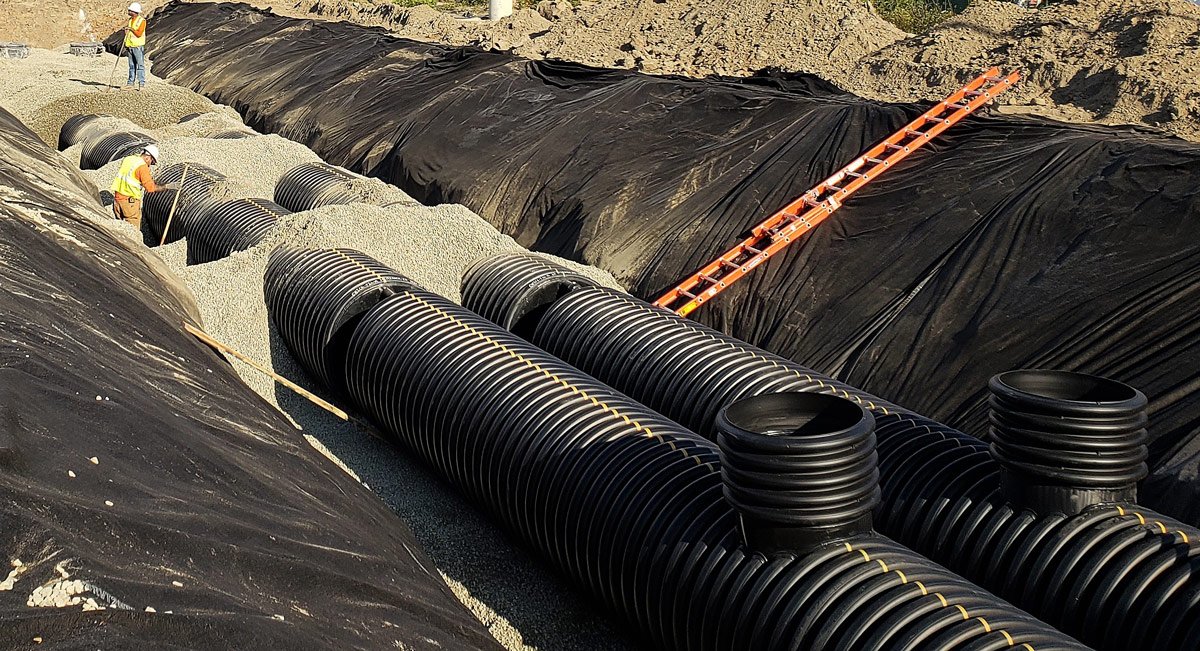
Snowmelt over frozen ground runs off as if it hit pavement. In Casper that matters, because a yard, truck court or building pad sheds water at the worst time of year, when the ground cannot take any. Stormwater detention and drainage is the system that slows that water, moves it where you want it and keeps it off your floor, your trucks and your neighbor's land.
We build detention ponds, swales, inlets, storm pipe, outlet structures and the grading that feeds them. We build them to hold up under heavy equipment and freeze-thaw cycles, and we keep them maintainable, because a pond nobody can reach to clean will not work for long.
Drainage goes in early on industrial sites, in step with site clearing and mass grading, because the whole yard slopes to it.
Design inputs and approvals
The City of Casper's climatic criteria list severe weathering, a 3,000 air freezing index and a three-foot frost line, and they point snow load to the 2024 International Building Code table and the ASCE Hazard Tool rather than a fixed number. Those inputs affect pipe cover, inlet details, concrete mixes and the mass of snow that can melt in one event. The drainage plan is part of the engineered site plan that reviewers expect with a commercial permit.
Outlets are a permitting question. Water leaving the site goes to a street storm system, a ditch or a channel, each with its own owner and rules. A recent state reconstruction along the Poplar Street corridor included storm and sanitary sewer and utility upgrades, a reminder that the public network is being rebuilt in places and that connection points can move. We confirm the outfall and its capacity before design is final.
Water, ground and what is already in it
Where water goes matters when the ground has a history. Evansville has groundwater contamination tied to former industrial operations, and the former refinery land along the river is still recovering. Infiltration basins, which let water soak in, are not an option where that could push contamination around. We design lined or sealed basins when the environmental report calls for them.
The North Platte River runs through the metro, and sites near it have high groundwater to deal with. A pond bottom that sits in groundwater does not detain anything. Test pits and monitoring wells tell us the water table before we set elevations, and the answer sometimes changes the layout.
Building a system that lasts
We build from the outlet upstream, so pipes and structures have a firm base and the grades are right from the start. Pipe bedding and backfill are compacted in lifts and tested. Inlets and manholes are set to grade with the pavement section in mind, so they do not become bumps or low spots in a truck court.
Ponds get stabilized slopes, a forebay or sediment trap, an outlet structure sized to the design and a maintenance path. We seed or armor as the design requires and photograph everything buried. The site reaches its first storm with the system working, not half-finished.
What changes the price
The price depends on the volume to detain, outlet distance, soil and groundwater, pipe size and depth, and restoration. Deep pipe in wet ground needs dewatering and shoring. A site that can use a surface pond costs less than one that needs underground storage beneath a yard. Land used for a pond is land not available for buildings or trucks, so the layout matters.
Large roofs on a distribution center shed a lot of water, and that sizes the whole system. More detention capacity sometimes costs less than a larger outlet pipe, so we price both. Plants in food and beverage add washdown water to the conversation, which has to be kept separate from stormwater.
What we install
Detention ponds and underground storage, outlet control structures, storm sewer, inlets, culverts, swales, trench drains at docks and drive-throughs, oil and sediment separators where required, and erosion control during and after construction. We tie into existing storm systems and coordinate with the utility owner.
Oil-water separators matter at refueling and wash areas. Dock aprons and loading areas need drains that handle runoff and spills, which we coordinate with dock aprons and loading zones. Each drain has a cleanout, a catch basin and a plan for who inspects it. Snow storage gets its own spot on the site plan, away from inlets and outlets, so spring melt does not overwhelm the first structure it reaches.
Trenches and open ponds
Deep trenches are the biggest hazard in drainage work. We shore or slope every trench, test for gas near older industrial ground, keep spoil back from the edge and keep ladders within reach. A competent person inspects each trench daily and after rain or thaw.
Ponds and open basins are drowning and fall hazards during construction. We fence them, light them at night and keep ramps for escape. After handover, we train your team on safe access for cleaning and inspection. Ice on a pond edge looks solid and often is not, so we post thin-ice warnings and keep people off frozen basins through the first winter. Pond maintenance crews work with a buddy, a rescue line and a written entry plan.
Plan the water before the pavement
Send the site plan, the building size and the paving you expect. We will review the outfall, the soils and the groundwater, and give you a drainage layout and price. Call us or use the quote form.
Common Questions
How big does a detention pond need to be?
It depends on the area that drains to it, the surface type and the release rate allowed at the outlet. The engineer sizes it to the design storm the reviewing agency requires. Paved yards and big roofs need more storage than gravel and lawn, so the drainage plan and the site layout are settled together.
Can I use infiltration instead of a pond?
Only where soils drain well, groundwater is deep and the ground is clean. Near the river or on land with a contamination history, infiltration may be restricted or unwise. A soils report and the environmental history settle the question before design.
How do you keep ponds and pipes from failing in freeze-thaw?
Pipes sit below frost depth or are insulated, and outlet structures are detailed so they do not trap ice. Pond slopes are stabilized and inlets are armored against scour. We also plan for snow storage, since piled snow melts into the same system.
Who maintains the system after turnover?
You do, and we hand over a plan. It lists the structures, the inspection schedule, how to clean sediment and where the outlet is. Training for your maintenance crew is part of turnover, with as-built drawings so nobody has to guess where a pipe runs.
Do I need a stormwater permit during construction?
Larger disturbed areas usually need construction stormwater permit coverage from the state environmental agency, and the city may have its own requirements. We confirm the thresholds for your site and keep the controls and inspection records the permit requires.