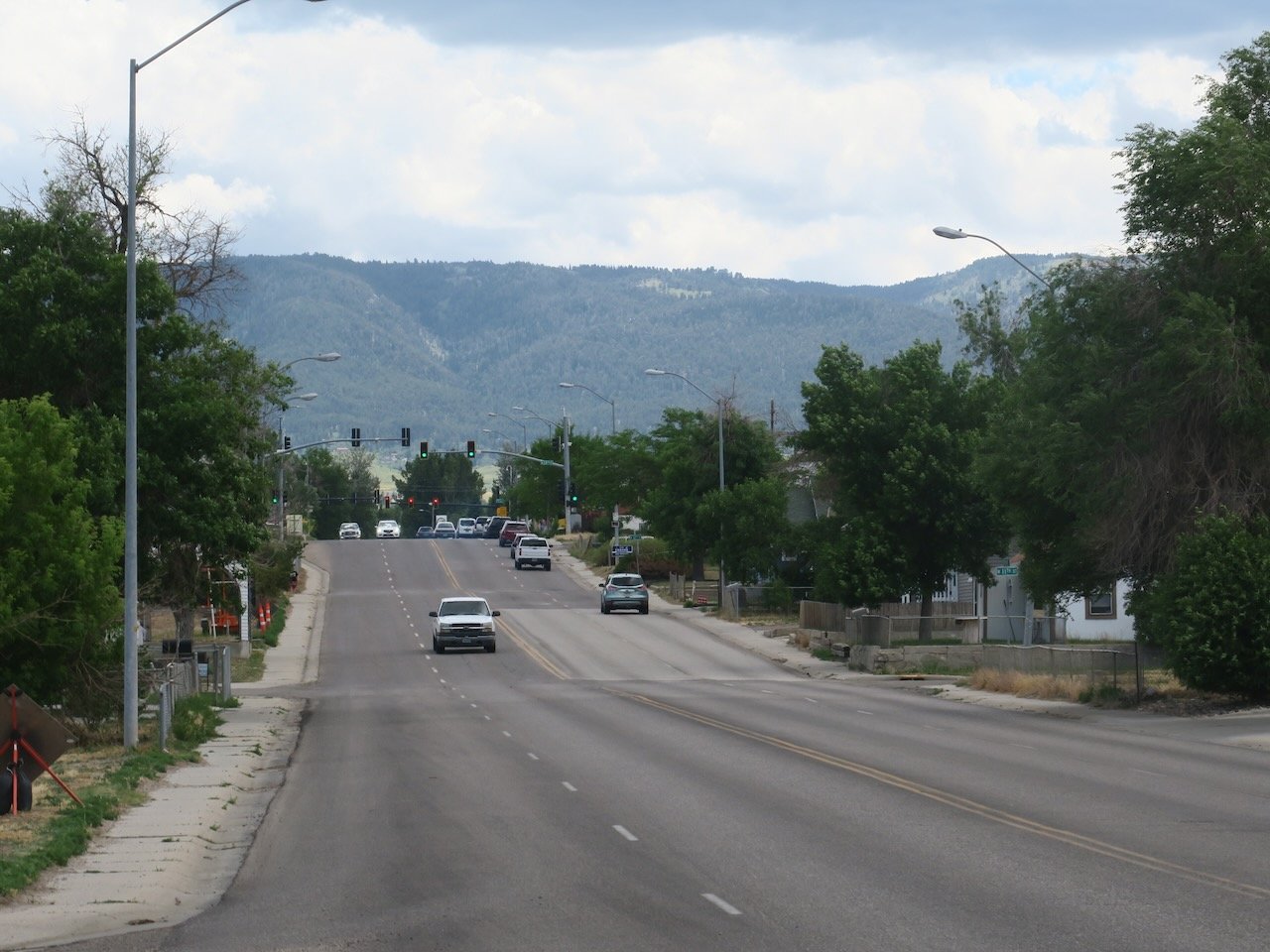
Detours decide delivery routes on Poplar Street, and any plant, shop or yard that depends on that road needs a contractor who reads the highway schedule as closely as the building schedule. Poplar Street (WYO 220) meets I-25 at a diamond interchange, exit 188B, west of the North Platte River, and WYO 220 west is reached from it. For businesses on this side of the river, that is the front door.
The state highway department has been rebuilding the road in stages. One contract between Collins Street and the North Platte River bridge, at $12.79 million, brought new surface, storm and sanitary sewer and utility upgrades, with a contracted completion date of November 30, 2025. A follow-on contract of $12.8 million, between CY Avenue and Collins Drive, runs two years with detours via Ash Street and a contract completion date of September 30, 2028.
That is a long stretch of lane closures, new utilities in the ground and changing curb cuts. We build for owners along it: yard and truck court improvements, entrance rebuilds, shop additions and utility tie-ins. Our teams arrive with a safety orientation, a traffic plan and a permit to work already filed. Nothing starts until the road plan and the site plan agree.
Working beside a live reconstruction
A highway project changes grades, drainage and access while it runs. Before we design a driveway or a yard, we get the current road plans and confirm where the new curb, storm line and sewer will sit. Tying into a new storm or sanitary line is a different job from tying into an old one, and the utility owner sets the rules. We never connect without the inspection and the paperwork.
The interchange work is not new here. A 2014 project rebuilt the Poplar Street and CY Avenue intersection, adding a left-turn lane on CY Avenue and right-turn lanes on Poplar Street, plus sewer and water line work. Intersections like that set the turning radius for heavy trucks. We lay out entrances and truck courts for the largest rig that will use them, and we check that with a turning template, not by eye. See our work on truck courts and trailer yards for how we size the apron.
Scheduling around lane closures and detours
The follow-on project uses detours via Ash Street. Detours push traffic onto streets that were not built for loaded trucks, and neighbors notice. We schedule concrete, steel and large equipment deliveries to avoid peak hours on the detour route, and we tell drivers the approved route by phone before they leave the plant. Owners of retail shopping center projects on a detour route should plan entrances and delivery windows with the same care.
We also plan around the contractor on the road. Two crews in the same corridor must not trap each other. We ask for the road contractor's lookahead schedule, share ours, and agree on shared laydown, hours and dust control. A wet, dusty haul road looks bad and creates a hazard. Water trucks and track-out mats go in before the first truck.
Permit to work first, then the work
On a corridor job we begin with the paperwork. The permit to work names the task, the hazards, the people and the stop-work rule. If the job touches the right-of-way, the permit for that comes first. We include flagging, signage and barricades in the plan, and we keep a log of each shift's closures so the owner can see what was done and when.
Next comes the field. We pothole utilities, set survey control, and mark the haul route. For any crew entering for the first time, a short safety orientation covers where to park, where not to walk, and who to call. When an owner needs a larger scope, the same team can take on the whole site utilities package: water, sewer, storm and power from the street to the building.
Owners we build for on this road
This road is a working corridor, so the owners we build for run real operations: oilfield-services shops, equipment yards, light fabrication, supply houses and warehouses. Their needs are practical. A tighter gate. A new apron where trucks idle. A fenced lay-down area for pipe, pumps or tanks. A pad for new equipment. We build those with an eye on the road outside.
Nearby, we also work in downtown Casper and in east Casper industrial areas. The three have different traffic, different permits and different truck routes. A site on Poplar Street may share a delivery driver with an metals and heavy industry customer elsewhere in town. We keep each plan site-specific.
What we manage on a corridor site
We closely manage the work that controls schedule and safety: excavation, grading, forming, rebar, and concrete placement and finishing. Managing it closely means one foreman answers for the sequence and the quality. It also means we can reschedule a crew when the road contractor opens or closes a lane.
Heavy items still go to specialists, such as structural steel, electrical gear and crane service, and we manage them with the same permit to work. Our superintendents attend the corridor coordination calls, track closures and tell you what the road schedule means for your date. If a closure moves, your schedule moves with it, and you hear about it that day.
Get your corridor job planned
Tell us the address, the cross street and the work you need. We will pull the road plans, check the detour dates and give you a schedule that holds up. For a first look at the larger metro, see our Casper coverage.
Common Questions
Will the road reconstruction delay my project?
It can. Lane closures, detours and utility shutdowns affect when trucks can arrive and where they can park. We get the current road schedule at the start, build deliveries around it and keep a weekly lookahead. Most of the risk comes from the final tie-ins, so we plan those early.
Can you tie into the new storm and sewer lines?
Yes, with the utility owner's permission and inspection. New lines put in by a road project have set connection points and rules. We confirm invert elevations, schedule the connection window and pull the permits before we dig.
How do you size an entrance for heavy trucks?
We start with the largest vehicle that will use it, then draw the turning path against the new curb lines. The apron thickness and base follow the axle loads. We would rather build a wide entrance once than rebuild a broken corner after the first winter.
What date does the current reconstruction finish?
The state highway department reported a contract completion date of November 30, 2025 for the section from Collins Street to the North Platte River bridge, and September 30, 2028 for the follow-on section between CY Avenue and Collins Drive. Dates can move, so we check the latest notice before we commit to a schedule.
Do you handle work on the north side of the river too?
We work across the metro, including areas reached from the same interchange. Each site has its own permit path and haul route, and we do a separate site walk before pricing.