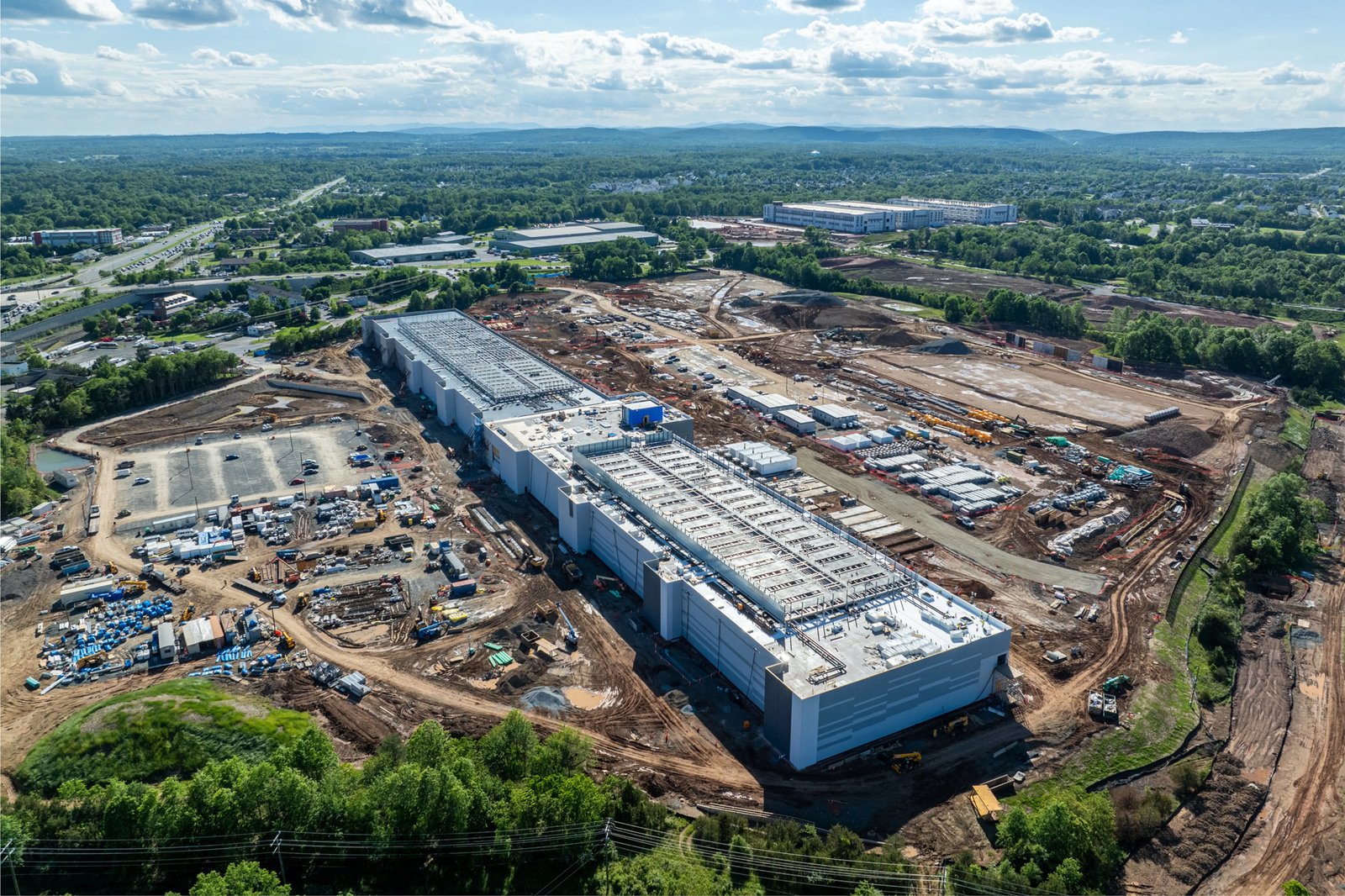
The data hall gets the attention, but the building next to it decides whether it stays on. Generator enclosures, switchgear houses, battery rooms, cooling yards, fuel storage and meet-me rooms are the support buildings that carry the load. We build them for owners in the Casper area who need power and connectivity to work together, and we build them with the same shutdown discipline we bring to a refinery.
The work is mostly electrical. That means heavy slabs for transformers and generators, sleeves and conduits laid before any concrete goes down, and clear separation between fuel, power and people. It also means rigorous documentation. Owners will ask for test records, torque logs, pour records and slab surveys, and we keep them as we go.
If the data hall is part of the same job, our data center construction page covers it. This page is about the buildings and yards that surround it, which are often built first.
Power, fiber and open ground
Data operators look for three things: power, fiber and land. Natrona County has some of each. The Wyoming Business Council approved $617,483 in grant funding for roughly 30,000 linear feet of fiber optic cable in and around the airport business park at 8500 Airport Parkway. The Town of Mills has franchise agreements with several telecom providers to build and operate fiber networks. Fiber paths are not a given at every site, so we ask early where the nearest entry point is, how many carriers can reach it and who owns the last stretch of conduit. A site with one carrier and one path is a different risk than a site with two.
On the power side, the Dave Johnston Power Plant, a large coal-fired generating station, is at Glenrock. We make no claim about what a utility will deliver to a given site. We plan for what the utility confirms in writing and we build the duct bank, pads and enclosures to match. The airport area is where much of the fiber conversation starts. Winter matters here too: at roughly 5,150 feet and with a three-foot frost line, equipment pads and duct banks have to be set below frost or protected, and cooling yards need wind and snow plans.
Buildings and pads we build
Generator enclosures sit on heavy pads with containment for fuel and a clear route for a crane or a truck. Switchgear houses are small buildings built to keep dust and weather out of energized equipment, usually prefabricated and set on a foundation we pour. Cooling yards hold chillers, dry coolers or pumps on slabs with drains, windbreaks and fences. Louvers, sound walls and enclosure doors are sized to the noise limits that the site and its neighbors accept. Fuel tanks need secondary containment, spill controls and fire code clearances.
Underground work ties everything together. We install conduit and electrical duct banks in concrete-encased runs, with spare sleeves because owners always add load later. Manholes, handholes and pull boxes are placed so cable can be pulled, not just installed. Each slab and sleeve is surveyed before pour, and we photograph the layout before the concrete truck arrives.
Codes, permits and inspections
The state fire marshal lists the 2024 International Fire Code, Building Code, Mechanical Code and Existing Building Code as applying, and it names the 2026 National Electrical Code for electrical work, while other Wyoming sources still cite the 2023 NEC, so the edition is confirmed with the department before design. The City of Casper lists the 2024 codes without naming an NEC edition. Generator fuel, battery rooms and fire separation all fall under the fire code, so the fire department reviews drawings early.
Wyoming has no single statewide building code. Cities and counties adopt and enforce locally, which is why the first step is always to confirm who the authority having jurisdiction is. A site inside Casper follows the city's permit path. A site in the county may follow different rules. We schedule inspections around utility interconnection, because no one energizes a switchgear house before the inspector signs.
Sequence and quality control
Underground first. Duct banks, grounding, sleeves and drains are installed and surveyed before slabs are poured. Then foundations and pads, with embedded plates and anchor bolts set from templates. Then equipment buildings, either site-built or set as prefab units. Last come the fence, the lighting, the signage and the final grade.
Every pour gets a record: mix design, temperature, slump, cylinder breaks. Every embed gets surveyed. Every conduit gets a mandrel and a pull rope. These steps are boring and cheap. They prevent a costly shutdown after the equipment arrives, and they give the commissioning agent something to check against. If a number does not match the drawing, we find out on the day, while the trench is still open, and not after the cable is pulled. We hand over a turnover package with as-builts, test results and photographs of every buried item before backfill.
Related work on the same pad
Support buildings rarely sit alone. They need equipment pads and foundations built to vendor drawings, access roads that carry transformer deliveries, fencing and lighting. They also need a plan for utilities. Owners in utilities and power and data centers often add a substation or a generator yard next to the hall.
Fit matters. A data center that is built in phases wants support buildings that can be extended. We leave stub-outs, spare conduits and fence gates where the next phase will connect, so future work does not require tearing out new work. Phased owners also ask us to keep construction traffic, cranes and welding away from live equipment. We build separate gates, lay-down space and a dust plan so the energized side of the site stays clean and the new side keeps moving.
Give us the single-line and the site
Send the one-line diagram, the equipment list and the utility letters. We will walk the site, confirm the authority having jurisdiction and price the pads, buildings and underground work in one package.
Common Questions
Do you build the data hall too?
Yes, and we explain that work separately. Many owners build support buildings and the utility yard first so power and fiber are in place when the hall goes up. We can build either or both.
Which NEC edition applies?
The state fire marshal page names the 2026 National Electrical Code, while some other Wyoming sources still cite the 2023 edition. Confirm the edition with the state Department of Fire Prevention and Electrical Safety and the local jurisdiction before the electrical design is finished.
How long does it take to get fiber to a site?
It depends on the provider and the route. Airport business park fiber is being funded, and Mills has franchised telecom providers, but each site needs written confirmation of a path. We do not schedule around a promise.
What do you need from the electrical engineer?
Equipment dimensions and weights, embed plates, conduit sleeves, grounding details and clearance zones. We also need the delivery dates for transformers, generators and switchgear, because they drive the pad schedule.
How do you handle generator fuel?
The design must follow the fire code, with secondary containment and spill controls. Fuel is delivered after the tank is inspected and tested. We build the pad and containment and coordinate with the fuel supplier's installer.