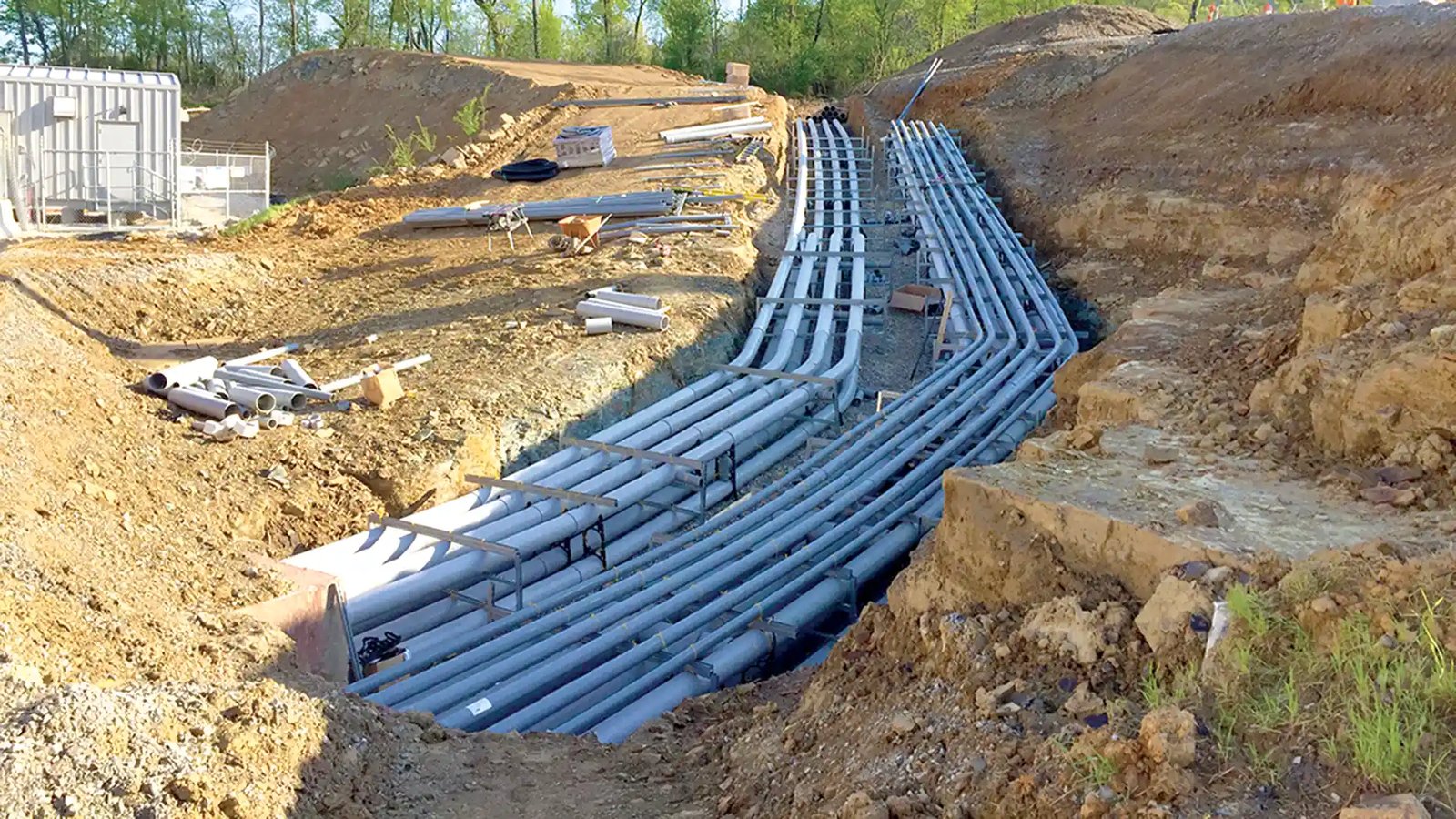
Conduit is cheap before the slab and expensive after. An electrical duct bank is the encased group of conduits that carries power, controls and communications underground between the utility service, switchgear, buildings and yard equipment. In an industrial plant it is the least visible and hardest-to-fix part of the electrical system, so we put it in the right place, at the right depth, the first time.
We build duct banks for plants, shops, pump stations and yards in Casper. They carry feeders to motor control centers, lighting circuits for the yard, instrumentation and fiber. They are sized for today's loads with a margin for the next addition, because digging the same trench twice costs more than a few spare conduits.
We do not design the electrical system. Your electrical engineer does that. We build what the drawings show, check it against the field and flag conflicts before concrete covers them.
Code, depth and the electrical edition
Electrical work follows the National Electrical Code edition the state and the local jurisdiction apply. The state fire marshal page names the 2026 edition, while other state sources still cite 2023, and the City of Casper's code page names no edition. We confirm the edition with the department and the electrical engineer before conduit sizes and burial depths are final. Cover depends on conduit type, voltage and whether the bank crosses traffic.
Frost matters too. The city lists a three-foot frost line, and a bank near the surface can heave if the soil around it is wet and freezes. We bed duct in clean material, keep water out and, where cover is shallow, encase in concrete and lay warning tape above. Electrical permits are separate from the building permit in many jurisdictions, and we make sure the right office reviews the right drawings.
What a duct bank package covers
Trenching, shoring and dewatering, base and spacers, conduit (PVC, rigid steel or HDPE as specified), concrete encasement with reinforcing, colored concrete for visibility, manholes, handholes and pull boxes, transformer pads, and spare conduits with pull strings. We add grounding electrodes and ground wire in the trench where the drawings call for them.
Pads and cabinets at the ends are part of the job. We pour equipment pads for switchgear and transformers and set sleeves through foundation walls. The bank must arrive at the right elevation and location, so survey control matters more than speed. The yard lighting that follows is covered under yard lighting and electrical site work.
Where it sits in the schedule
Duct banks go in after rough grade and utility coordination, and before the slabs, paving and foundations that cross them, including industrial concrete floors. They also depend on long-lead gear: transformers, switchgear and pad-mounted equipment set elevations and turn locations, so we need final submittals before we pour. If gear is late, we leave stub-outs and cap them.
Utility company coordination takes time. The power provider sets the service point, the metering and often the transformer. We submit early, share the schedule and tie the work to the site utilities package. In cold weather, concrete encasement needs protection, so we pour in the right temperature window or add heat and blankets.
Control the line and the depth
We survey the route and stake the trench, pot-hole existing utilities and set conduit on spacers at the specified separation. Bends follow the plan, with long-radius sweeps for large conductors so cable pulls cleanly. Conduit joints are cleaned and sealed, and ends are plugged during construction so mud and water stay out.
Before concrete, we inspect with the electrical engineer or owner's representative: spacing, cover, bends, ends and spares. Photos and survey go into the record. After the pour, we mandrel and proof the conduit and install pull strings. A duct that cannot be pulled has failed, and we want to find out before the trench is closed.
Digging near live power
Striking a live line is the main hazard. Underground electric lines can kill. We locate, pot-hole, hand-dig and use insulated tools where we cannot avoid working near lines. Our one-call process is documented, and on plant sites the owner's excavation permit and electrical drawings are reviewed in the daily meeting.
Trench safety is the second hazard: shoring or sloping every excavation, keeping spoil back and having a competent person inspect daily. Concrete trucks and pump lines add traffic and overhead risk, so we plan each pour with spotters and a controlled area.
What drives the cost
The number of conduits, the encasement, the depth and the length of the run are the main drivers. Rock, groundwater, and road or rail crossings add cost. Larger conduits, extra spares and heavier encasement raise the price, but spares are cheap compared with a second trench. Pulling cable is usually the electrician's scope, so we agree who does what and when.
Fiber and communications conduits add little cost when run in the same trench. The county's recent fiber project near the airport business park, a $617,483 grant for roughly 30,000 linear feet, shows the interest in running data lines alongside other utilities. Where you expect to add controls or security, put the conduit in now. Production lines in advanced manufacturing are a good example of loads that grow.
Mark the routes before the first trench
Send the single-line diagram, the site plan and the target energization date. We will check the routes, the field conflicts and the schedule, then price the duct bank. Call us or use the quote form.
Common Questions
How many spare conduits should I include?
Enough that the next addition does not need a new trench. Many owners add two or three spares per bank, sized for the largest feeder they might add. The cost is small next to excavation, encasement and restoration later. Your electrical engineer sets the final number.
Concrete encasement or direct burial?
Encasement protects the conduits under traffic, at crossings and in shallow cover, and it keeps spacing fixed. Direct burial in sand can work where cover is deep and loads are light. The engineer specifies it, and we advise on cost and cold-weather placement.
Which electrical code edition applies?
The state fire marshal page names the 2026 National Electrical Code, while other state sources cite 2023, and the City of Casper's code page names no edition. We confirm with the department and your engineer before the design is sealed. The answer can change conduit fill, depth and grounding details.
How do you protect conduit from water and frost?
Ends are plugged, joints sealed and the trench is kept dry during construction. Bedding is clean and free-draining, and shallow sections are encased. Pull boxes and manholes get drains or sumps, since water that gets in can freeze and damage cable.
Can you work around existing energized lines?
Yes, with locating, pot-holing and hand-digging near the lines, and with the owner's permit and a clear isolation plan. Where a line must be crossed, we hold clearances and sometimes shut it down for the crossing. We never dig blind near energized power.