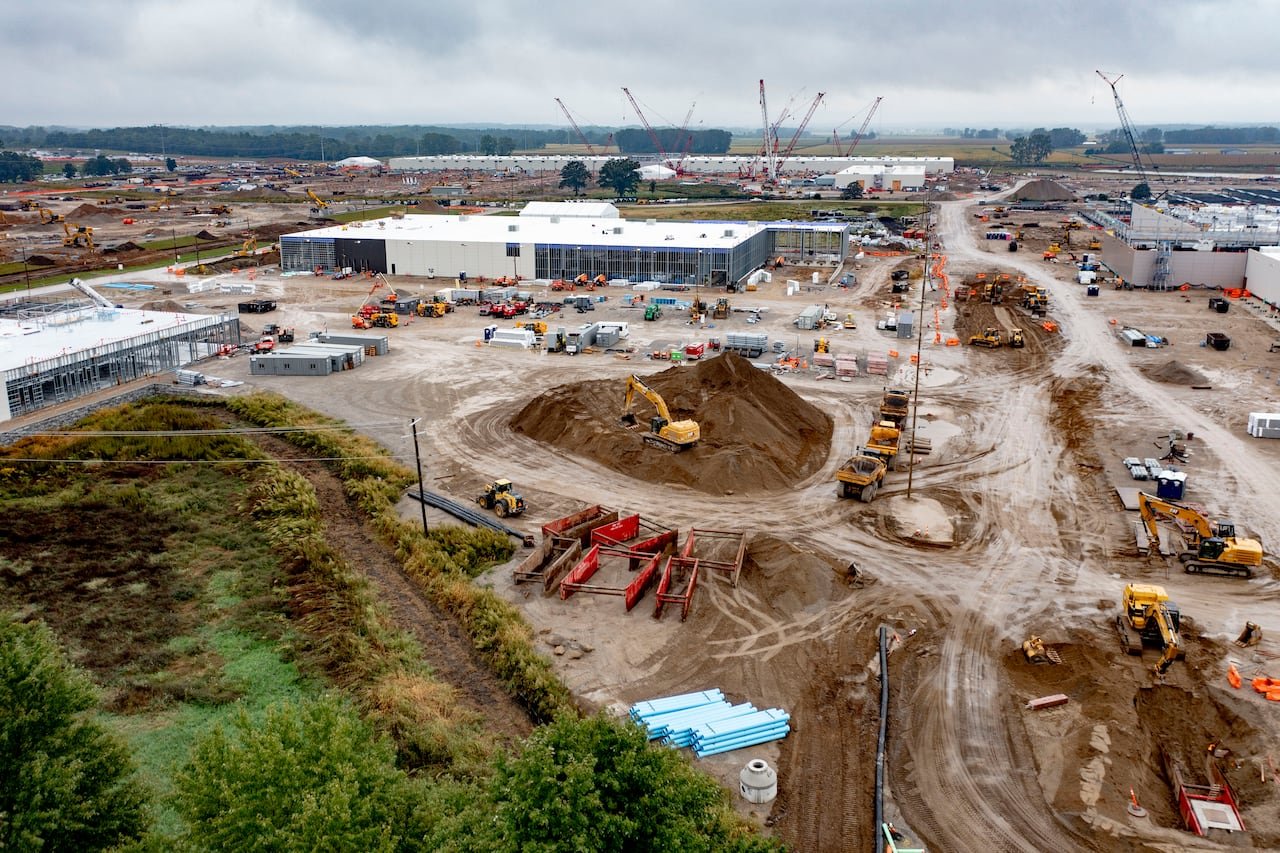
Outage windows run the schedule on utility work. A generating station, a substation or a water plant gives you a few weeks, sometimes a few days, and the contractor either finishes inside that window or does not get invited back. We plan backward from the outage, and we plan around the permit to work, because on a utility site nothing moves without one.
Natrona County has two very different generation sites that frame the market. The Dave Johnston Power Plant, a large coal-fired station, sits at Glenrock. The Alcova powerplant sits at the foot of a 265 foot dam on the North Platte and carries two 18 MW Francis turbines, 36 MW installed, generating about 92,408,000 kWh a year. Between them they show the range: thermal generation and hydro, with a lot of switchyard, intake and civil work in both.
We are a civil and structural builder, not an electrical utility. We build the pads, ducts, vaults, roads, buildings and yards that utility crews work from. We coordinate with your line crews and your engineer, we follow your own rules for working near energized equipment and we treat your safety orientation as the ticket to the gate.
Plants, pipelines and public works
Utility owners here are varied. A generating station needs laydown space, heavy-haul roads, ash and water handling and turbine hall maintenance. A public works department needs water treatment, lift stations and sewer. The Town of Mills lists a Public Works department with a water treatment facility. An oilfield power or CO2 system needs foundations and pipe supports in rough ground.
The Salt Creek field is a good example of utility-scale civil work in the county. A CO2 flood plan reported in 2005 included a 125-mile pipeline, with an investment of up to $624 million (the operator and figures are from that year and may have changed). It shows how much trenching, crossing and pad work goes into a single energy project. We prepare for similar work in rough ground with our site utilities package.
Working near energized equipment
Utility work comes with a stricter rule set. We follow your lockout and tagout program, your minimum approach distances and your switching orders. Crane operators get overhead line briefings. Excavation near buried lines starts with locates, hand digging and a spotter. Confined space entry into vaults, tanks and manholes needs a written entry permit and a rescue plan.
Work stops for lightning, high wind and ice. The Casper area records severe weathering and a three foot frost line, and Natrona County's high plains weather swings in hours. We build wind and ice holds into daily plans and do not argue with them. Nobody is behind schedule enough to justify a crane lift in a gust.
What we manage closely
Excavation, backfill, compaction, concrete forming and placing, rebar, anchor bolt setting and site grading are work we manage closely. That covers transformer pads, equipment foundations, stormwater detention and drainage, containment curbs and vault bases. We check survey control closely, so embeds and anchor bolts land where the drawings say.
For underground power and communications, our concrete-encased duct banks are set to grade and checked before backfill. We pour pads with the cold-weather methods a Wyoming winter demands, and we place access roads that carry cranes and boom trucks. Where a job needs a specialty trade, such as high-voltage cable pulling or relay work, the utility's own crew or a qualified subcontractor handles it, and we coordinate access.
Typical utility and power scope
Switchyard grading and stone, control house foundations, transformer oil containment, fence and gate packages, yard lighting and site electrical, fire water supply for the equipment, intake and discharge structures and access roads. Some owners also want a small operations building or a warehouse for spares, which we build with the same team and schedule.
The buyer is often a municipal body, a cooperative or a private generator, and the way they procure differs. Public owners bid and require bonding and detailed submittals. Private owners may negotiate. We have a method for each and we explain it up front. For the public side, government and municipal owners are covered in their own page, and for load-heavy customers such as data centers, the electrical yard is the whole project.
Codes, county rules and approvals
Wyoming has no single statewide building code, so the first call is to the local authority. The state adopted the 2024 International Codes on June 28, 2024, and the City of Casper lists the same family, with its amendments in Title 15. The fire marshal page names the 2026 National Electrical Code, while other Wyoming sources cite 2023, so confirm the edition before design is final.
Utility structures often fall under their own regulators and standards in addition to building code. A Casper commercial permit lasts 180 days and often needs a life-safety plan, engineered site plan drawings and zoning approval. WYDOT is also relevant when work crosses a highway. The Poplar Street reconstruction in Casper, for example, includes storm and sanitary sewer and utility upgrades, so coordination between road work and buried utilities happens daily. We plan for that kind of overlap on the Poplar Street corridor.
Where we work
Glenrock, east of Casper along I-25 and US 87, has the large coal-fired station. Alcova lies on the North Platte, and the dam and reservoir there are a Bureau of Reclamation structure finished in 1938. Both are within reach of Casper-based crews, and both come with long haul days in winter.
A job at Alcova is a lesson in setting: a remote river site with limited laydown and steep access. Planning there is the same as at any distant site. Crews bring what they need, housing and fuel are part of the bid and weather decides the days. We state travel cost as a line item, not a surprise. Also see metals and heavy industry for the process side of these fence lines.
Send us the outage dates
Give us the outage window, the drawings and the site rules. We will return a plan that finishes before the lockout ends and keeps your people safe along the way.
Common Questions
Can you work inside an operating power plant?
Yes, under the plant's own safety rules. We go through site orientation, follow lockout and tagout, and work from a permit to work for each task. Hot work and crane lifts have extra approvals. We schedule heavy or noisy tasks to match outages.
How do you plan around an outage window?
Backward from the outage start. Long-lead items get ordered first, foundations and pads are built early, and the work that has to happen in the window is rehearsed. We carry a recovery plan for weather and for late materials. Everything that can be done before the outage is done before it.
Do you build substations?
We build the civil and structural side: grade, stone, foundations, oil containment, ducts, fence and access. Electrical equipment installation and testing is done by the utility's crew or a qualified electrical contractor. We coordinate so the two scopes meet cleanly.
What are the winter risks for utility sites?
Frost, ice and wind. Footings go below the frost line the city lists, concrete is protected in cold weather and lifts are held during high wind. Roads and pads need drainage so they do not become ice sheets. We plan winter access and snow storage as part of the site design.
How do public owners buy this work?
Usually by competitive bid with bonding and detailed submittals. Our preconstruction work helps public owners write clear scopes and realistic schedules. Private owners may negotiate, and for them we offer open-book pricing.