Anything we raise near a runway has to clear two reviews: the building official and the airport. We build shops, hangar-adjacent buildings, aprons, utility corridors and yards in the airport business park northwest of Casper, and we plan the crane, the haul route and the badge list before we plan the slab.
The airport covers 5,150 acres at 5,344 feet, with a 10,165 foot main runway and an 8,679 foot crosswind runway. It handled 43,126 operations in 2022, most of them general aviation, and based aircraft need hangars, fuel areas, maintenance floors and parking. Scheduled passenger service and daily freight flights add to the load on the apron and the road network around the terminal.
Next to it, the NCIA Business Park houses more than 35 businesses, from manufacturing to aviation. That mix shapes the work: light industrial buildings beside hangars, with shared roads and shared utilities. Our teams reach the field from Casper, about seven miles to the southeast, so a short job does not need a camp.
What we build around the field
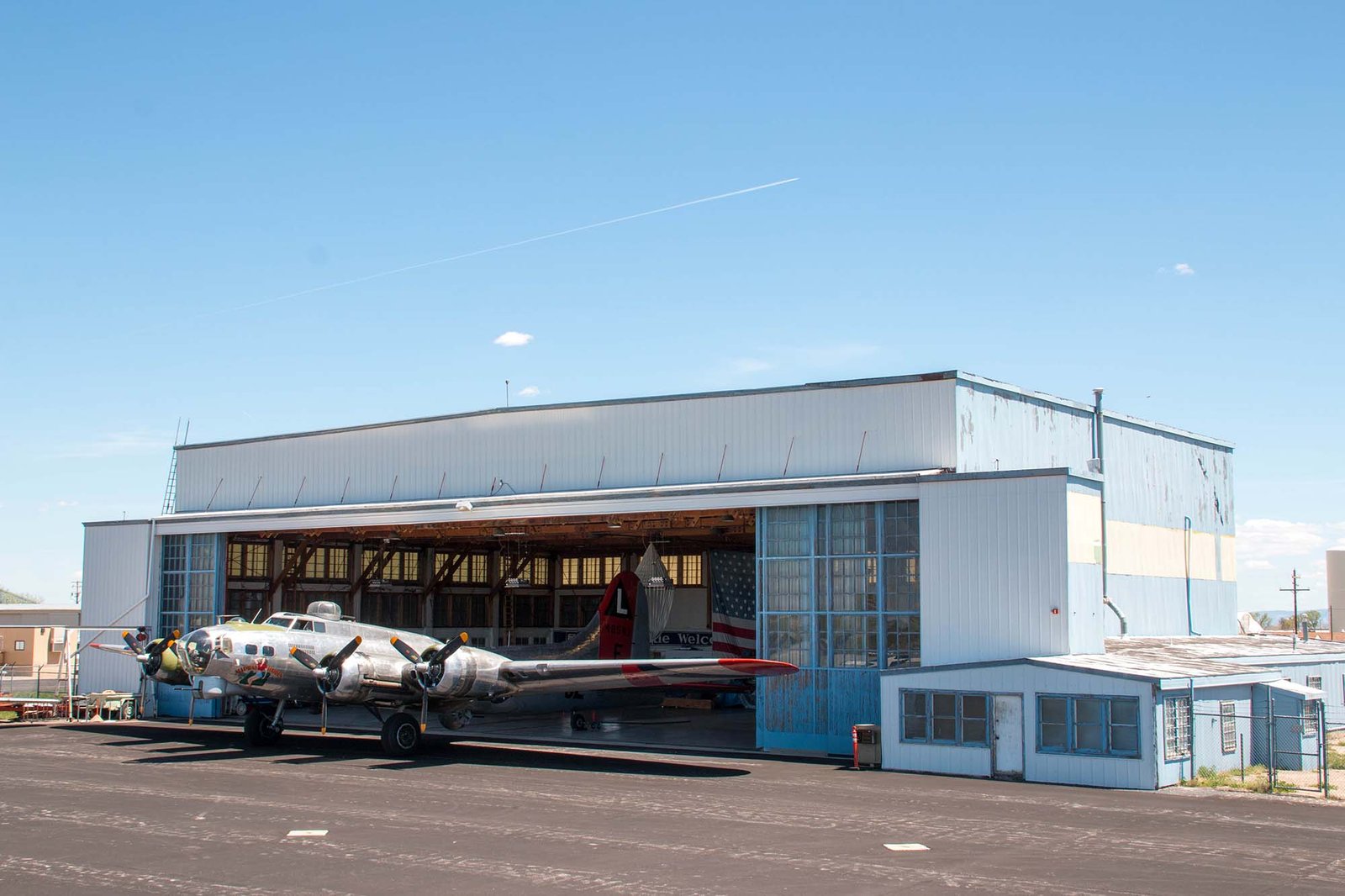
We build the ground-level pieces that an airport business depends on. Aircraft hangars need wide clear spans, large door openings and slabs that carry towed aircraft. Maintenance shops need floor drains and oil separators. Service yards need pavement that drains toward a controlled outfall. We also build the offices attached to them, in steel or metal frame, at the quality the tenant requires.
For aprons and loading areas we pour reinforced concrete sections sized for the heaviest vehicle that will cross them, with joints laid out to handle turning loads and winter freeze. Our dock aprons and loading zones work follows the same logic when a business uses the airport for cargo or distribution, and we set grade so that spilled fluid is caught instead of running to the field.
Airport rules plus building permits
A project at the airport has two rule sets. The first is the local building permit, which for City of Casper commercial work often calls for a life-safety plan, engineered drawings and Planning and Zoning approval. The second is the airport operator's own set: lease terms, height limits, security badging, construction safety plans and limits on when runways, taxiways and haul routes can be crossed.
Tall cranes and boom lifts near a runway can need notice to the FAA, and the review takes time. We ask for your building height and crane plan at the start and we build review time into the schedule. We never move equipment onto a movement area without an escort and an agreed clearance from the airport.
Why the airport is an industrial site
The airport operates Foreign Trade Zone 157, with a Magnet Site of 492 acres at 8500 Airport Parkway and a boundary that covers nearly all of Natrona County. For a manufacturer or distributor, that matters because duty can be deferred on goods that enter the zone, and buildings on a magnet site can be arranged for that use. We build to that need: secure yards, bonded storage layout and docks that suit the customs process.
The Wyoming Business Council approved $617,483 in grant funding for Natrona County to install roughly 30,000 linear feet of fiber optic cable in and around the business park at 8500 Airport Parkway. Fiber affects how we place conduit and handholes, and we coordinate with the county so site work does not cut or block the route. The nearby town of Bar Nunn grew up around the older Wardwell Field, so the area has seen airfield-driven development before, and we apply what we know about building on and beside airfield ground.
Services that go with airport work
Airport tenants need more than a building. We install electrical duct bank and underground work for power and data, fire water lines and hydrants, and yard lighting that respects the airport's limits on glare. Where a tenant leases space, we also do industrial tenant improvements such as demising walls, offices and power upgrades.
The Wyoming State Forestry Division Helibase on airport grounds serves as the state's centralized wildland fire operations center, with fueling, parking, maintenance and crew housing, next to a federal tanker base. That tells us what an airport campus asks of a builder: mixed uses on a tight footprint, fire-sensitive materials and a client who needs to be operational on a fire call.
Site conditions on the airfield
Airfield ground is open and windy. Dust is a hazard for aircraft, so we control it with water and covers, and we keep loose material from blowing onto taxiways. We sweep haul routes at the end of every shift and track foreign object debris, because a bolt left on a ramp can damage an engine.
Excavations near runway lights, navigation aids and buried cable need extra care. We locate, mark and hand-dig. A cut cable can shut a runway, which the airport and the airlines will remember. We also coordinate with the airport on every closure, and we have a plan for rapid backfill if a trench must reopen before an aircraft arrives.
Working inside airport windows
The airport announced a new air traffic control tower, a 157 foot structure replacing a 50 foot tower built in 1954, at just under $30 million. Groundbreaking was set for August 14 and completion is expected in early 2028. A project that size changes traffic, badging and lay-down space on the field, and neighboring contractors need to share the road. We schedule our deliveries and crane lifts to avoid the busiest weeks.
Airport work also moves with the flight schedule. Daily freight flights and the scheduled passenger service set the pace of the apron. We plan noisy or tall work for the gaps and give the airport a two-week look-ahead.
Planning a building at the airport?
Send us the lot, the use and the height. We will tell you which reviews apply and how long they take. Look also at the Casper logistics hub or the ecommerce and fulfillment sites we plan.
Common Questions
Do I need a special badge to build at the airport?
Usually yes. The airport operator controls access to secured areas, and construction personnel must be badged or escorted. We submit the crew list in advance, brief everyone on the rules and keep the list current as people rotate.
Can I put a hangar on an airport lot?
That depends on your lease, the airport layout plan and the taxiway access for the lot. We build the hangar once you have the lease and approvals. We help you check clear span, door height and slab loads against the aircraft you plan to store.
How do you handle cranes near the runways?
We submit the crane location and height for review, follow the airport's rules for marking and lighting, and keep the boom down when aircraft are moving if the rules require it. The crane plan is part of the lift plan and the safety plan.
What does Foreign Trade Zone 157 mean for a building?
A building on a magnet site may be arranged for zone use, with secure storage, controlled access and documentation space. The customs rules are the operator's job; we build the facility to the layout your customs broker and the airport operator approve.
How long does a business park lot take to develop?
Grading and utilities can take a few weeks, a metal building a few more, and approvals set the pace. We build a schedule with the permit, the airport review and the long-lead items on it, and we update it weekly.