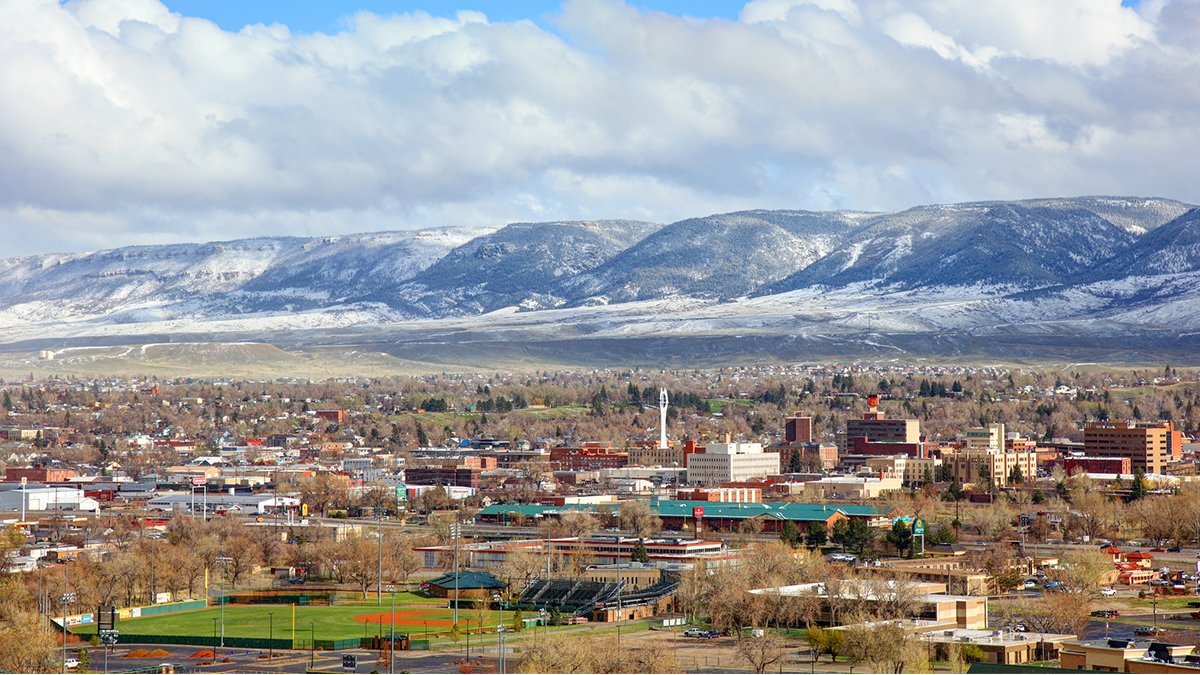
A transload yard is only as good as its surface. Rail cars, rock, pipe, wind components and fertilizer all end up on the ground eventually, and the ground has to carry them. At the Casper Logistics Hub, we build the base, the drainage, the aprons and the buildings that make a rail-served site work for the owners who ship in and out.
The hub is Magnet Site 2 of Foreign Trade Zone 157, listed at 984 acres at 6 Mile Road and Commerce Street. Northeast of the Casper airport, a rail yard with 18 tracks and a length of 19,000 feet covers about 250 acres, with tracks for drop-offs and pickups, loading and unloading, storage, and the assembly of 100-car unit trains.
We work with the people who use that kind of site: shippers, haulers, storage operators and the contractors who support oilfield and energy work. The hub sits near the airport and its business park, so freight, fiber and utilities are close at hand.
What we manage in the ground
We schedule and supervise the work that decides whether a yard lasts: clearing, bulk grading, subgrade proof-rolling, base placement, geotextile, drainage and concrete or asphalt surfaces. For rail-served sites, our rail spur site improvements include the grading next to track, crossings for trucks and the aprons where product moves between car and truck.
A heavy yard is a pavement design problem. Wheel loads from rubber-tired loaders, axle loads from loaded trucks and point loads from outriggers all stress a section differently. We build for the worst case you describe, and we add drainage under it. A section that fails in its first spring is more expensive than one built right.
What the yard handles, and what that means
The yard handles bentonite, barite, refining products, oil and gas materials, wind-energy components, fertilizer, wood, construction materials and a rebar project. Each commodity asks something different of the ground. Bentonite and barite are powders that need covered storage and dust control. Wind components are long and heavy and need wide, flat staging. Fertilizer needs containment and drainage that keeps runoff out of the soil.
Peak years saw about 500 cars a month, while the August 2026 report puts the current figure near 150. That swing is useful for planning: a yard should be sized for surges but be economical in slow months. We lay out phases so an owner can build part of the yard now and add pavement, buildings and track-side pads as volume returns.
Buildings beside the tracks
Yards need buildings. A truck terminal or cross-dock moves freight between rail and truck, a warehouse building protects packaged goods and a shop services the equipment. We build those as steel or metal frame structures on reinforced slabs, with dock heights that match the trailers and the rail cars.
Covered storage matters for bulk products. A fabric-covered or metal-framed shed with a concrete push wall and a drained floor keeps product dry and loaders safe. We detail the push walls to the loader's force and the floor to the product's abrasion, because a floor that wears away in a year is an expensive floor.
Lighting and security come with the buildings. A yard that works at night needs poles, conduit and controls laid out before the base goes down, not cut into it after. We run the conduit with the first lift of base and leave pull strings in every run.
Sequence and season
A rail-served site has to be built without blocking the trains. We schedule track-side work around the carrier's windows, coordinate flaggers and keep equipment off the right of way unless it is cleared. When the yard stays in service, we divide it into zones so one section can close for work while the rest runs.
Weather sets the rest. Heavy grading and base work suit the dry months, and paving and concrete need warm, stable days. At this elevation the window can close fast, so we start large earthwork early and put weather protection into the plan for late placements.
How we plan a hub project
We begin with the loads and the flow. What arrives, by what mode, in what quantity, where it waits and how it leaves. Then we sketch the yard around that, with truck routes that do not cross loader paths and storage that is close to the point of use. Only after that do we draw pavement.
Then we price in options, so the owner can see what extra thickness, extra drainage or extra lighting would cost. Many hub owners start with a basic yard and upgrade it as business grows. A phased stabilized laydown yard is often the first step.
Access roads come next. Haul trucks, mobile cranes and low-boy trailers need turning radii wider than a standard driveway gives, and a gate that is too narrow stops a wind blade at the fence. We lay out heavy-haul access roads with the longest load in mind and leave room for the escort vehicle.
Safety on a busy yard
A yard with rail cars, loaders, trucks and workers on foot is a traffic problem. We set a traffic plan with marked routes, spotters, backup alarms and speed limits. Pedestrians use marked paths, and no one walks behind equipment without eye contact with the operator.
Work near track requires its own training and authority from the rail carrier. We follow their rules for flagging, clearances and lockout. For bulk material, we also control dust, and we keep hazardous materials separated and labeled. A site safety orientation is required for everyone who enters.
Need a rail-served yard that carries the load?
Tell us the product, the trucks and the volume. We will describe the base, the drainage and the phasing. See also our Bar Nunn work and the logistics and distribution facilities we build.
Common Questions
Can you build a yard that handles wind turbine components?
Yes. We design the base for the heaviest component and the equipment that will move it, and we provide wide, flat staging with enough turning room. We also plan the haul route into the yard, because a narrow gate can stop a delivery.
Who controls work next to the rail tracks?
The rail carrier controls access to its right of way and tracks. We coordinate flagging, clearances and schedules with them and we follow their training requirements. Plan for review time before you set a start date.
How big should a bulk storage pad be?
Size follows the product's volume, its angle of repose and how the loader works. We help you draft the layout, confirm the loader's reach, and set the push wall and drainage so material stays put and runoff is controlled.
Is a magnet site different from other industrial land?
It is land the zone operator has designated for foreign trade zone use. Buildings can be arranged for that use, but the customs and zone rules sit with the operator and your broker. We build the facility to the layout they approve.
Can I start with a small yard and expand?
Yes. We phase the grading, drainage and base so later sections tie in cleanly, and we leave utility stubs and conduits for the next stage. It costs a little more to plan that way, and it saves a lot when you expand.