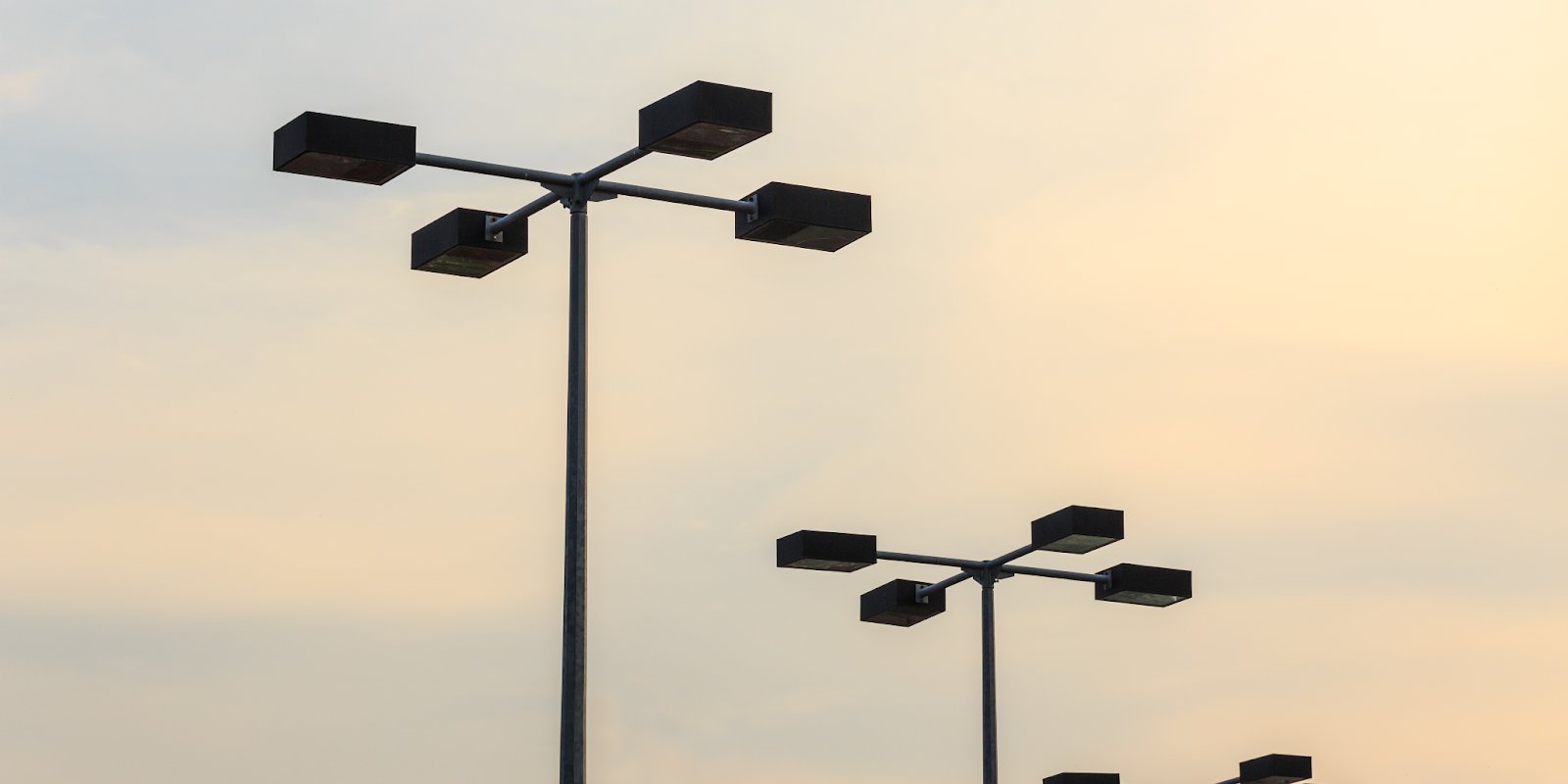
Dark yards cause incidents. A forklift driver cannot see a pedestrian, a rigger misses a trip hazard, a night shift reads a tag wrong. Good yard lighting is a safety measure first and a convenience second, and it takes more planning than a row of poles.
We build the electrical site work that makes industrial yards usable after dark: pole bases, conduit and underground duct banks, pull boxes, service entrances, feeders to lighting and to small loads like gate operators, cameras (see our fencing and security work) and trailer pedestals. The electrical design comes from your engineer. We build the civil and underground side, and we coordinate with the licensed electrical contractor who terminates and energizes.
Near a refinery or a gas plant, or any heavy industrial plant, add one more question: where are the classified areas? That answer changes the fixture, the conduit seals and the clearance from the process.
Pole bases, conduit and the order of work
The order matters. We survey the pole locations, call in the utility locates, and open the trench. Conduit and duct bank go in at the depth the electrical design requires, with warning tape and spare conduits for future loads. Pole bases are drilled and set with anchor bolts cast to the template, then tested and backfilled in lifts. Pull boxes sit at the grade the owner will keep, not at the grade of the temporary yard.
We pour concrete in cold weather with blankets and heaters when needed, because a pole base that froze green is a pole base that moves. After the electrical contractor pulls wire and sets the fixtures, we help with aiming, so the lights cover the hazard areas and not the neighbor's windows. We put the layout in a record drawing the maintenance crew can use.
Codes, editions and who inspects
The state fire marshal's page names the 2026 National Electrical Code for electrical work, while other Wyoming sources still cite the 2023 edition, and the page says to confirm the edition with the department. We follow that advice. The first step on any job is a call to the jurisdiction, because the edition in force sets conductor sizing, grounding and the clearances we build to.
The City of Casper lists the 2024 International Codes as adopted, with amendments in Title 15 of its municipal code, and it names no NEC edition on its code page. County and town work follows local adoption. We confirm who inspects, what the permit requires and whether a site electrical permit is separate from the building permit. Inspections hold the schedule, so we book them early.
What we build and what the electrician does
Our scope usually covers excavation, conduit and duct bank, concrete encasement where required, pole and equipment foundations, transformer pads, pull boxes and handholes, and restoration of the ground and paving. The electrical contractor handles wire, fixtures, panels, terminations and testing. We pass the drawings back and forth, so the trench and the pull match.
We also handle the unglamorous parts: marking the route so the next excavator does not hit it, leaving spare conduit under roads and crossings, and documenting depth. On gravel yards we set pole bases outside the traffic path and add guard posts where trucks swing wide. Near a laydown yard, we plan for temporary power that can be moved without trenching again.
Hazardous areas, locks and tags
Process areas carry classification boundaries. Lighting inside them needs fixtures and wiring methods that suit the classification, and conduit passing across the boundary may need seals. We do not decide classification, the owner and the engineer do, and we build to the drawing. If the drawing and the field disagree, we stop and ask.
Digging near energized lines is the other big hazard. We pothole to confirm every locate, hand-dig within the owner's tolerance zone, and keep a spotter on the excavator. Lock-out and tag-out apply to anything we cross or tap. The permit to work lists the hazards, the isolation points and the people, and we do not start until it is signed.
Lead times and tie-ins
Fixtures, poles and transformers can take months to arrive. We ask the electrical contractor for the delivery dates first, then build the foundations and conduit to be ready on that day. A pole base without a pole is an empty promise, and a pole without a base is a stack of steel on a pallet. We plan trench work to be open for the shortest time possible and close it before freezing weather.
Utility tie-ins have their own calendar, and utility-side work is rarely ours to move. The serving utility schedules the outage, the energizing and the meter, and it does not move for our convenience. We line up our work so the site is ready when the utility is. If the yard serves a turnaround, backwards-schedule from the shutdown date and leave time for testing and aiming.
What drives the cost of yard power
Trench length and soil are the first drivers. Long runs across rocky or frozen ground cost far more than short runs in clean fill, and rock excavation can change a budget overnight. The second driver is the number of poles and the voltage, because bigger feeders need bigger conduit, bigger pull boxes and deeper cover. The third is restoration: cutting through new asphalt or concrete means patching to match, and patches are a maintenance headache.
We reduce cost by routing along planned roads and fence lines, sharing trenches between power and data, and setting the pole spacing with the lighting designer rather than after. We also price spare conduit as an option. It is cheap while the trench is open and very expensive after the yard is paved. Most owners add capacity later, and we would rather you add it by pulling wire than by cutting a new trench.
Send the yard plan and the load list
Share the site plan, the classified-area drawings and the lighting layout. We will price the underground work, line it up with your electrician and give you a schedule tied to fixture delivery.
Common Questions
Which NEC edition applies in Casper?
The state fire marshal names the 2026 NEC, other state sources still cite the 2023 edition, and the City of Casper code page names no edition. Confirm with the department and the local inspector before design starts. We build to what they confirm.
Do you do the wiring?
We build the civil and underground side: trenching, conduit, duct bank, foundations and restoration. A licensed electrical contractor pulls the wire and terminates. We coordinate with them from the start and can bring one onto the team.
How deep should conduit be buried?
Depth comes from the electrical design and the code edition, and in this climate it also depends on traffic loads and frost. We confirm the requirement before we trench and mark the route.
Can you add lighting to a yard that is already built?
Yes. We open the surface, install conduit and bases, restore the pavement or gravel, and phase the work so the yard stays usable. Locating existing lines first prevents expensive surprises.
What about fiber and data for cameras and gates?
We install spare conduit and pull boxes alongside power. In the Casper area, public money has gone into fiber near the airport business park, and the town of Mills has granted franchises to telecom providers for fiber, so connectivity is increasingly available. We design paths for it.