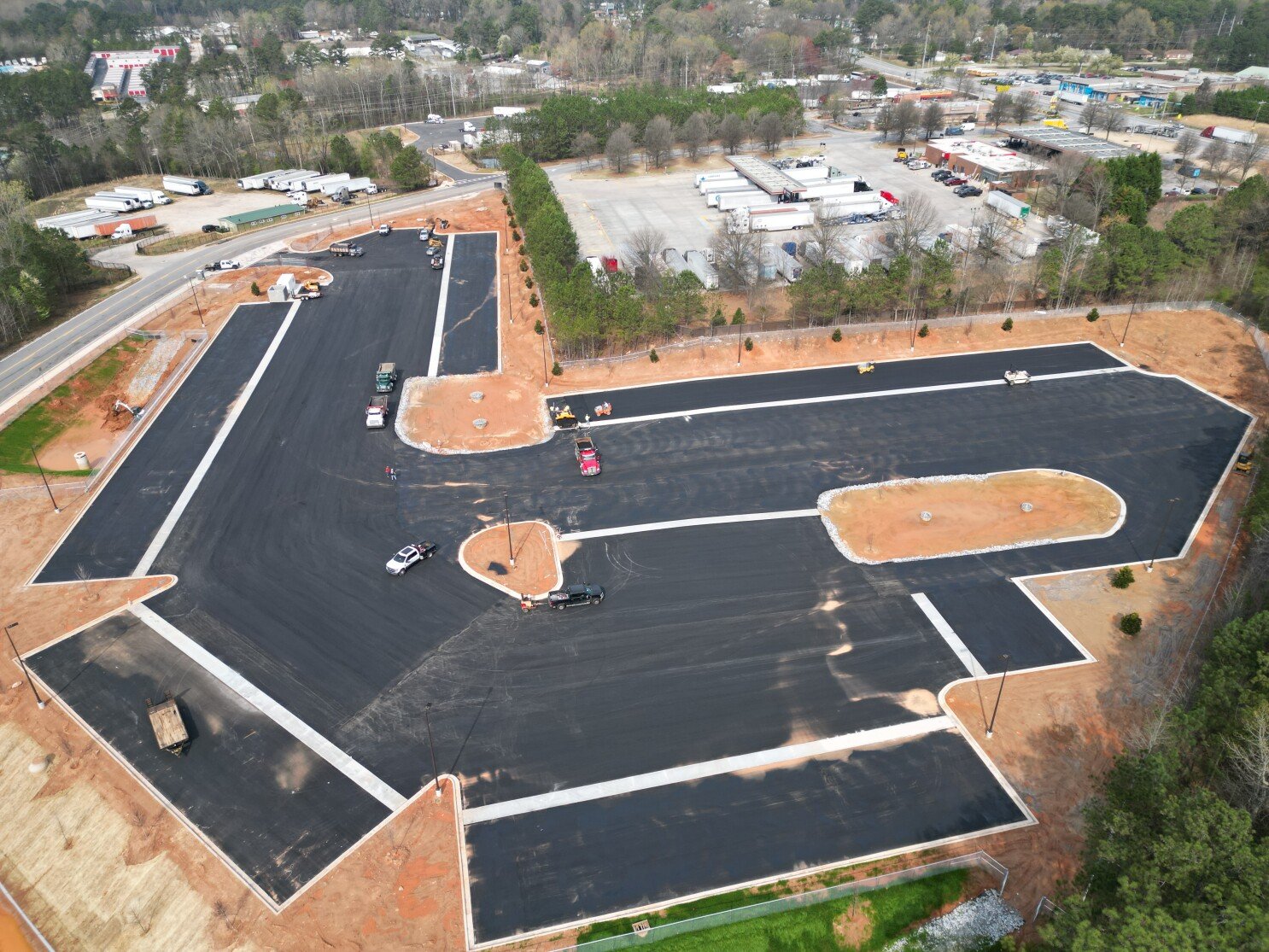
Shift change tests a parking lot harder than any other hour of the day. A lot of cars leave while a relief crew arrives, a tanker waits at the gate, and a plow truck is trying to clear the same pavement. If the lot was laid out as an afterthought, you find out then.
We build stabilized parking for heavy industrial plants, fab shops, oilfield-services yards and the contractors who work beside them in Casper and Natrona County. That covers employee lots, visitor and contractor parking during a turnaround, bobtail and trailer parking, and overflow gravel lots that need to carry heavy trucks without turning to soup. The surface might be asphalt, concrete, or a compacted aggregate section, depending on the loads and the budget.
Safety is the starting point. Separate people from trucks, light the lot so a night crew can see, and keep the emergency route clear. Then we build the base and the drainage to match.
What a stabilized lot includes
We strip topsoil, proof-roll the subgrade and correct what is soft. The base is built from compacted crushed aggregate over geotextile where the soil calls for it. For lots that see loaded trucks, we design a thicker section than for passenger cars, and we do not mix the two on one pavement thickness. Edges get curb or a compacted shoulder so the pavement does not unravel under turning tires.
Layout matters as much as thickness. We set stall angles, aisle widths and turning radii for the vehicles that will actually use the lot, including oilfield pickups with trailers and service rigs. Pedestrian walkways run on the outside of the lot or behind a protected line, not across the middle. Accessible stalls and routes tie into the building entrance, and signs and striping are laid out with the site plan, not added later.
Plan review and what the city expects
City of Casper commercial permits often require a life-safety plan, engineered building and site plan drawings and Planning and Zoning approval, and an issued permit is good for 180 days. Plan review covers structural calculations, engineering reports and specifications. A parking lot is a site improvement, but it often triggers drainage review, accessible-route review and landscaping or lighting conditions, so we assemble the site plan package with those in mind.
The 180 day clock is a real constraint on a seasonal job. If the permit issues in late fall and the paving season opens in May, a lot can run out of time. We stage the work so the underground, base and drainage go in when the ground allows and the final surface follows when the weather does, and we keep the permit status in front of the schedule. Outside the city limits, the county or town sets its own process, so we confirm which authority has jurisdiction before we price.
Built for plows, salt and frost
The coldest recorded reading in the small oil-field town of Midwest is minus 42 degrees Fahrenheit, and its warmest is 106. That range is hard on any pavement. Water gets in, freezes, and lifts the surface. We build crowns and cross-slopes so water leaves the lot, put drain inlets where the water goes, and keep detention away from the heaviest wheel paths.
Plow trucks shave a pavement edge every winter, so we set manhole covers, valve boxes and light pole bases flush and well marked. We also leave snow storage areas on the plan. A lot with no place to push snow ends up with piles in the stalls by February. For lots without pavement, we use a well-graded aggregate with fines tuned for compaction and dust control, and we plan a regrading cycle into the maintenance budget.
Where the money goes
The base is usually half the cost. After that, paving, curb, stormwater inlets and lighting make up most of the rest. Soil quality drives the base depth, and haul distance drives the aggregate price. If your site needs a detention basin or a connection to a municipal storm system, price that separately and early. Lighting is often cut and then regretted, because dark lots are a safety problem and an insurance question.
A gravel lot is cheaper at first and costs more over time in grading and dust control. An asphalt lot costs more up front and holds a line for years if the base was right. Concrete costs the most and holds up under turning trucks and trailer landing gear better than anything else. We will price each so you can see the tradeoff with real numbers rather than a rule of thumb.
Access, traffic and where the lot sits
Access decides where a lot works. The Westwinds Road interchange on I-25 north of Casper opened on October 5, 2018, and the north I-25 corridor now has an exit that puts new industrial ground near a freeway. A lot there can be designed around heavy truck turns and queueing without backing traffic onto a county road. The same logic applies at a truck terminal where trailers queue for a door. Near older streets, we check the turn radius and sight distance before we draw a stall.
On operating sites we phase the work so people can still park. We close a section, build it, and open it before we start the next. Contractors and visitors get a temporary lot with signs and a safe walking route. For turnarounds, we plan a contractor lot that can be built weeks ahead and turned over to the shutdown manager with gates, lighting and a marked entry. Laydown yards and parking often share a footprint, and we design them as one surface when the loads allow it.
Plan the lot before the crew arrives
Tell us how many cars, how many trucks and where the entry is. We will propose a layout, a pavement section and a phasing plan that keeps your shift change moving.
Common Questions
Asphalt, concrete or gravel for a plant parking lot?
Passenger parking on a good base does well in asphalt. Truck turning areas and trailer storage do better in concrete. Overflow and temporary contractor parking can be compacted aggregate if you accept regrading and dust control. We usually mix surfaces in one site and price each zone.
How do you plan snow removal into the layout?
We set snow storage areas on the plan, keep fixed objects flush or marked, and slope the lot so melt does not run across walkways. Plan the storage early. It is hard to add later.
Does a parking lot need a permit in Casper?
Usually it falls under the site plan for a commercial permit, with drainage, accessible-route and lighting conditions. We confirm the review path with the city or the county before we price, because the 180 day permit window affects the schedule.
Can you build the lot while the plant stays open?
Yes. We phase it, keep a clear emergency route, post a temporary parking area and run traffic control. The owner's safety lead approves the plan before we mobilize.
What about accessible parking?
Accessible stalls, aisles and routes are laid out with the site plan and built to the same grades the inspector will check. We keep cross-slopes tight on those stalls and tie them to a compliant route to the entrance.