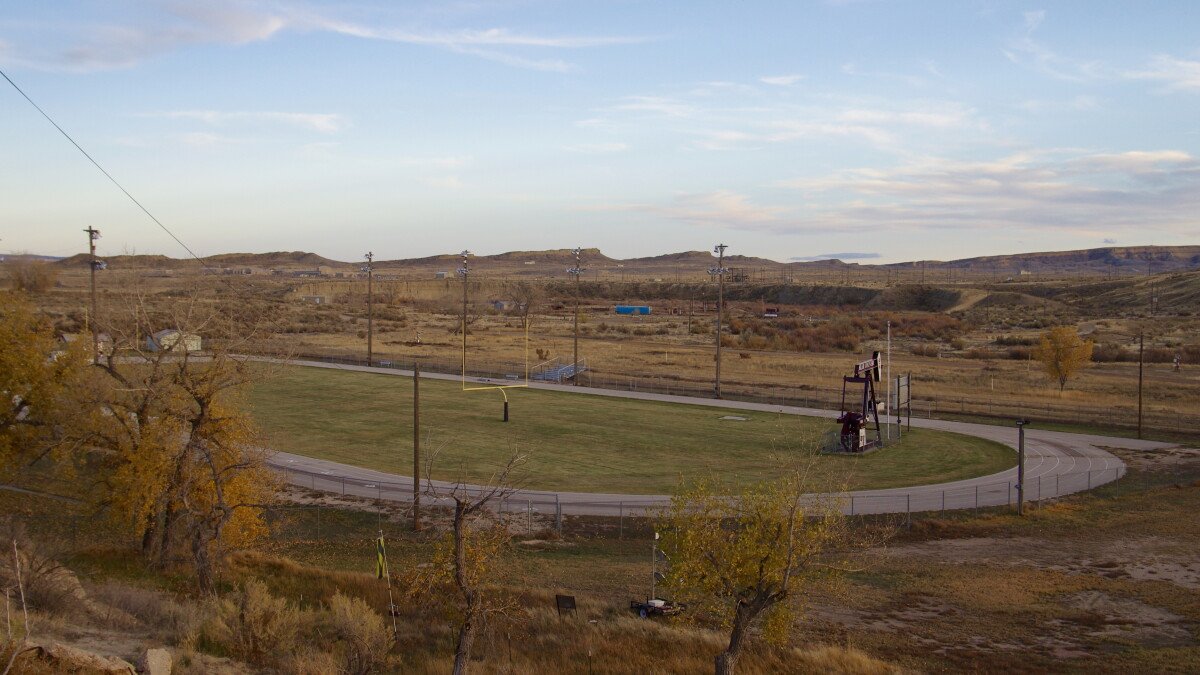
A town of 285 people cannot staff a construction crew, so we bring ours, along with the fuel, the water, the heater and the first aid kit. Midwest had 285 residents in the 2020 census, down from 638 in 1980. Owners who build there are building for oilfield work, not for a local labor pool, and we plan the job that way.
The town says its history carries the taste of the oil field pioneers and that new oil field industries also operate there. That is the buyer we serve: service companies, small operators and haulers who need a shop, a yard, a pad or a road within reach of the field. We build the shell, the slab, the gate and the lighting, and we hand over a place that works the first winter.
From Casper the trip is long enough that mobilization matters. We pack every pour, every delivery and every crew change into a plan, and we hold a safety orientation at the gate. A permit to work covers each task. If you are weighing a new yard or a shop here against leasing in town, we can price both.
How trucks get here
WYO 387 begins at a diamond interchange with I-25/US 87 (exit 227), runs about 6 miles east to Midwest and continues through Edgerton. That is the route for ready-mix, steel, pipe and equipment, and it is also the route every oilfield truck uses. We confirm weight limits, seasonal restrictions and winter conditions before we schedule a load.
The road also shapes the building. A shop on this highway needs a wide, thick approach, a gate set back far enough for a long trailer, and a pull-off where drivers can stop. The same logic works near the Salt Creek Oil Field, where operators want a yard close to wells and roads that carry loaded rigs. We lay out access first, then the building.
What we manage on remote sites
Remote work favors tight scheduling. Our trade partners clear, grade, form, place rebar, pour and finish. They build industrial concrete floors, equipment pads and yard slabs without waiting on outside trades to arrive over a long road. Fewer handoffs means fewer people on the road and fewer idle hours.
We also carry the tools that make remote work safe: gas monitors, a trailer with a first aid station, a cold-weather concrete kit and a radio plan. Everyone who works on site has a safety orientation and a copy of the emergency route. Small crews get a buddy system in the field, and they check in at fixed times.
Cold, wind and long distances
Midwest's climate record shows a high of 106 F and a low of minus 42 F. A range like that touches every material and method. Concrete needs heat, blankets or accelerated mixes in the cold. Asphalt and sealants have narrow temperature windows. Steel and welds behave differently at the extremes. Equipment batteries die. We plan for the cold end of that range first, because a failed pour at minus 20 F is worse than a delay.
At 4,849 ft elevation, wind is frequent. It stops crane work, blows over wall panels and drives snow into drifts that close roads. We set wind limits for lifts, secure materials every evening, and build snow fence into the yard design when drifting is likely. For a maintenance shop with service bays, we also place overhead doors on the leeward side where the site allows.
Why remote jobs price differently
Distance adds cost in four ways: travel time, mobilization, material freight and weather days. A crew that drives a long way eats into the productive day. Ready-mix that travels far needs retarders in summer and heat in winter. Small orders cost more to freight. A forecast of wind and cold means unpaid standby. Add the cost of getting a replacement part or a missing fitting from town, and a half-day task can become a full day, so we carry spares of the items most likely to stop work.
We show those items separately so you can see what is the building and what is the distance. If you can combine work, such as a pad, a shop and a yard in one mobilization, the distance cost spreads across more scope. We often suggest phasing so that the first mobilization builds the critical piece and the second builds the rest when budget and weather allow.
Where we work around Midwest
We work along the same highway and in the surrounding field. To the east, the next stop is Edgerton. To the south and west lie field facilities and ranch roads. Back toward the interstate, crews working from Casper reach exit 227 for supply runs. Owners often ask whether we serve the whole stretch. We do, from one mobilization plan.
If your project is a larger pipe yard, a vehicle shop or an equipment compound, we can take it through site work, concrete, enclosure and utilities. A metals and heavy industry customer may require tolerances and crane access that an ordinary shop does not. Tell us the equipment and we design to it. We also walk the site with the owner at the end of the job, test gates and lights, and leave a short list of winter care items: where to keep the snow off the apron, which drains to check in spring, and who to call if a slab joint opens.
Price a remote build honestly
Tell us what you need to build and the day you need it open. We will send a bid that separates building cost from distance cost. See our stabilized laydown yard work for a first step.
Common Questions
Do you have to bring a full crew from Casper?
Yes, in most cases. The town is small, so we staff the job with our team and trade partners and plan transport, lodging if needed, fuel and supplies. That planning is part of the price, and we show it to you plainly.
How cold is too cold to pour concrete?
There is no single number. We pour in cold weather with heated enclosures, insulating blankets, warm water and accelerated mixes, and we measure slab temperature. The climate record shows lows near minus 42 F, so we rarely place concrete on the coldest days. We schedule structural pours for warmer windows.
What highway do trucks use to reach the town?
WYO 387 begins at an I-25/US 87 interchange at exit 227 and runs about 6 miles east to Midwest, continuing through Edgerton. We plan deliveries along that route and confirm any limits ahead of time.
Is it cheaper to build or to lease in town?
It depends on how long you will use the space and how special it is. A shop with cranes, wash bays or a large yard is hard to lease. A simple storage building might be easy. We price both so the decision rests on numbers.
Can you help with the permit path in a small town?
Yes. We ask the local building authority which rules apply, and Wyoming leaves code adoption and enforcement to local jurisdictions, so requirements vary. We prepare plans, track review and keep work on hold until approval.