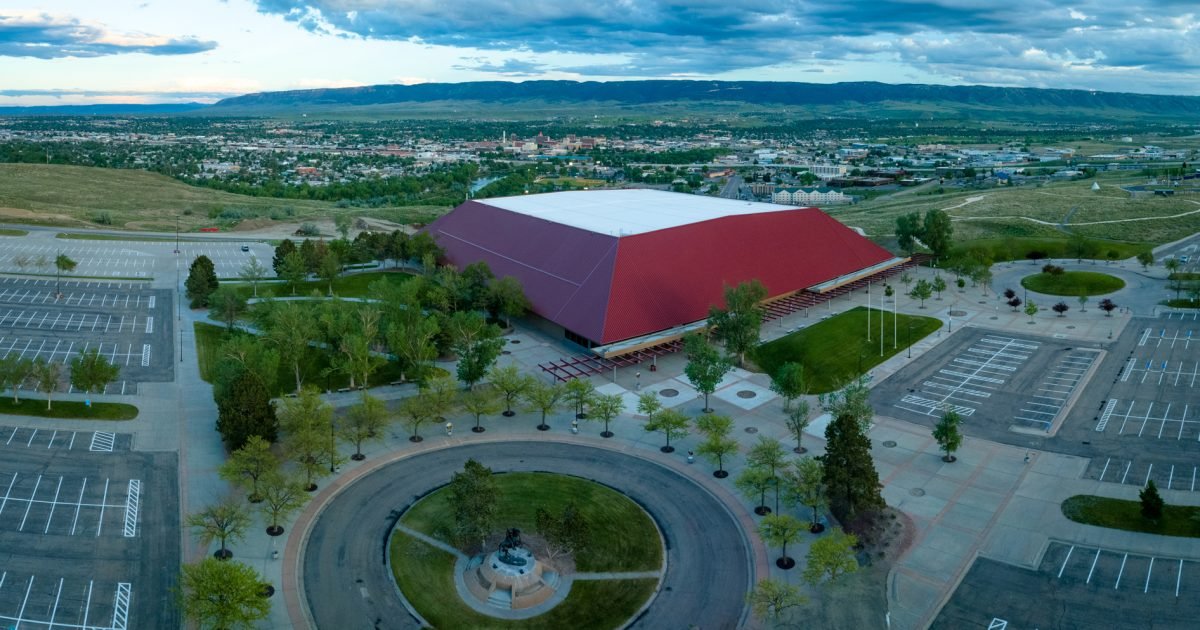
Event-day traffic decides when a loaded truck can reach a jobsite near the Casper Events Center, so we write the delivery schedule before we write the pour schedule. The arena holds 8,395 for ice hockey and indoor football, 8,842 for basketball and up to 9,700 for concerts. When that many vehicles leave at once, the access road backs up and nothing heavy moves.
The building is owned by the City of Casper and opened in April 1982 at a cost of $22 million. A facility that age has mechanical rooms, loading areas and service yards that have been patched many times. Owners of buildings like it call us for the work behind the show: dock and receiving rebuilds, slab repair, utility yards, equipment pads for new rooftop and plant equipment, and secure storage compounds.
The same exit also serves industrial neighbors. If you run a yard, shop or distribution operation in the area, you share the interchange with a crowd several nights a year. We plan shipments, crane picks and concrete trucks around the event calendar. Safety is the same as on a plant: orientation, a permit to work, a marked haul route and a flagger at every crossing.
One interchange, two kinds of traffic
The I-25 diamond interchange at exit 189 meets US 20/26, which heads west toward Shoshoni and the airport. It also serves the access road to the arena. That makes it a working gateway for freight bound for the airport side of town as well as for fans on game night. Trucks heading up the interstate toward the north I-25 corridor use the same ramps.
For an industrial owner, the useful fact is simple. One interchange carries both streams, and a stalled concrete truck at the wrong time blocks everyone. We keep a staging plan for deliveries, with a holding area off the public road, a radio check with the driver before the last mile, and a hard stop on arrivals during load-in and load-out windows.
How we run a job next to a crowd
We start with a walk of the site and the event calendar side by side. Then we mark every day we cannot take a heavy delivery. Good schedules put steel, precast, big pours and crane lifts on dark days. Smaller tasks fill the event days: layout, rebar tying, form work inside the fence.
Fences matter more here than on a remote plant. The public finds every gap. We use solid barricade on pedestrian sides, lock gates at night, and light the yard. If you need fencing and security integration for a service compound or a contractor yard, we build it as part of the work and tie in access control early so deliveries do not wait for a guard.
Dark days, winter and long-lead gear
Casper winters are hard on concrete and on schedules. Cold-weather placement needs blankets, heated enclosures or accelerated mixes, and each adds cost and time. We plan big pours for shoulder months where we can, and we protect slabs for the first days after the pour so a cold night does not undo a good finish.
Long-lead equipment sets the real calendar. Switchgear, rooftop units, dock levelers and overhead doors can take months. We order against approved submittals and hold deliveries on a nearby laydown area until the crew can set them. A truck that arrives early with nowhere to unload is a safety problem, so we do not take deliveries without a staging plan.
Services that match an aging public building
Buildings of this vintage need steady modernization, and we do that under one contract: industrial renovations and modernization, slab replacement, new service bays and upgraded receiving. Where the building also hosts trucks and trailers for stage and equipment loads, a rebuilt dock apron and loading zone with proper drainage and reinforced concrete lasts through repeated heavy turns.
We also build the quiet infrastructure: electrical duct banks, hydrant and fire-water lines, and lighting for parking and yards. That work often needs to finish before a season opens. We phase it so the building keeps operating, and we plan outages with the owner's operations lead and not around them.
What moves the price near an event venue
Three things drive cost here. First, time windows: if you can only take deliveries on dark days, crews wait and rental equipment sits. Second, winter: protection, heat and slower production add to any pour between late fall and early spring. Third, traffic control: flaggers, barricades and signage for a live public road are line items, not extras.
We price all three at bid time so there are no change orders for rules that existed the day you called. A warehouse-style shop or truck terminal and cross-dock next door has the same cost drivers, with extra weight on slab thickness and approach paving because trailers turn tight and often.
Permits and plan review in Casper
City of Casper commercial permits often require a life-safety plan, engineered building and site plan drawings and Planning/Zoning approval. Plan review covers structural calculations, engineering reports and specifications, and an issued permit is good for 180 days. The city also lists the 2024 International Codes, with amendments in Title 15 of its municipal code.
We keep the permit set current on site and run inspections against it. For work that touches the public road or the interchange approach, we add the right-of-way and traffic-control reviews to the critical path. We do not assume an edition for electrical or energy work that the city page does not name. We confirm it with the building department before design is locked.
Plan your next job around the event calendar
Bring us the site, the drawings and the dates you cannot lose. We will build the schedule around the arena calendar and send a bid with the traffic plan inside it. See our heavy-haul access road work if your site needs a new entrance.
Common Questions
Can you work on a site that shares access with the arena?
Yes. We schedule heavy deliveries, crane picks and big pours on days without events, and we keep a staging area off the public road. Smaller crew tasks fill the event days. A written traffic plan, a radio check with each driver and flaggers at the crossings keep trucks out of the crowd.
How do you avoid blocking the interchange?
We never let trucks queue on the public road. Drivers hold at a staging area and are released by radio when the gate is clear. For long concrete placements we stagger the trucks, and we coordinate with the city on any lane closure before it happens.
Does a building from the early 1980s need special handling?
Often. Drawings are sometimes out of date, and utilities may sit in different places than the sheets show. We survey and pothole before we cut, test unknown materials before demolition, and plan hot work around the old building's fire-protection layout.
Which codes apply to a commercial build here?
The City of Casper lists the 2024 International Codes and points to Title 15 of its municipal code for amendments. It names no energy or electrical edition on that page, so we confirm those with the building department. Wyoming also leaves code adoption to local jurisdictions.
What does an event-side yard or dock project cost?
Cost depends on slab thickness, drainage, winter protection and time windows. We give a budget range after a site walk and send a full bid once drawings and the delivery schedule are set. Traffic control and off-peak work are priced separately so you can see what they add.