Forty miles of highway separate Casper from the ground at Hell's Half Acre, and every day of that drive goes into the price of a job. We take remote roadside work along US 20/26: gravel pads, truck parking, small shops, fencing, demolition of old roadside structures and site cleanup. We price the miles, the weather and the ground honestly.
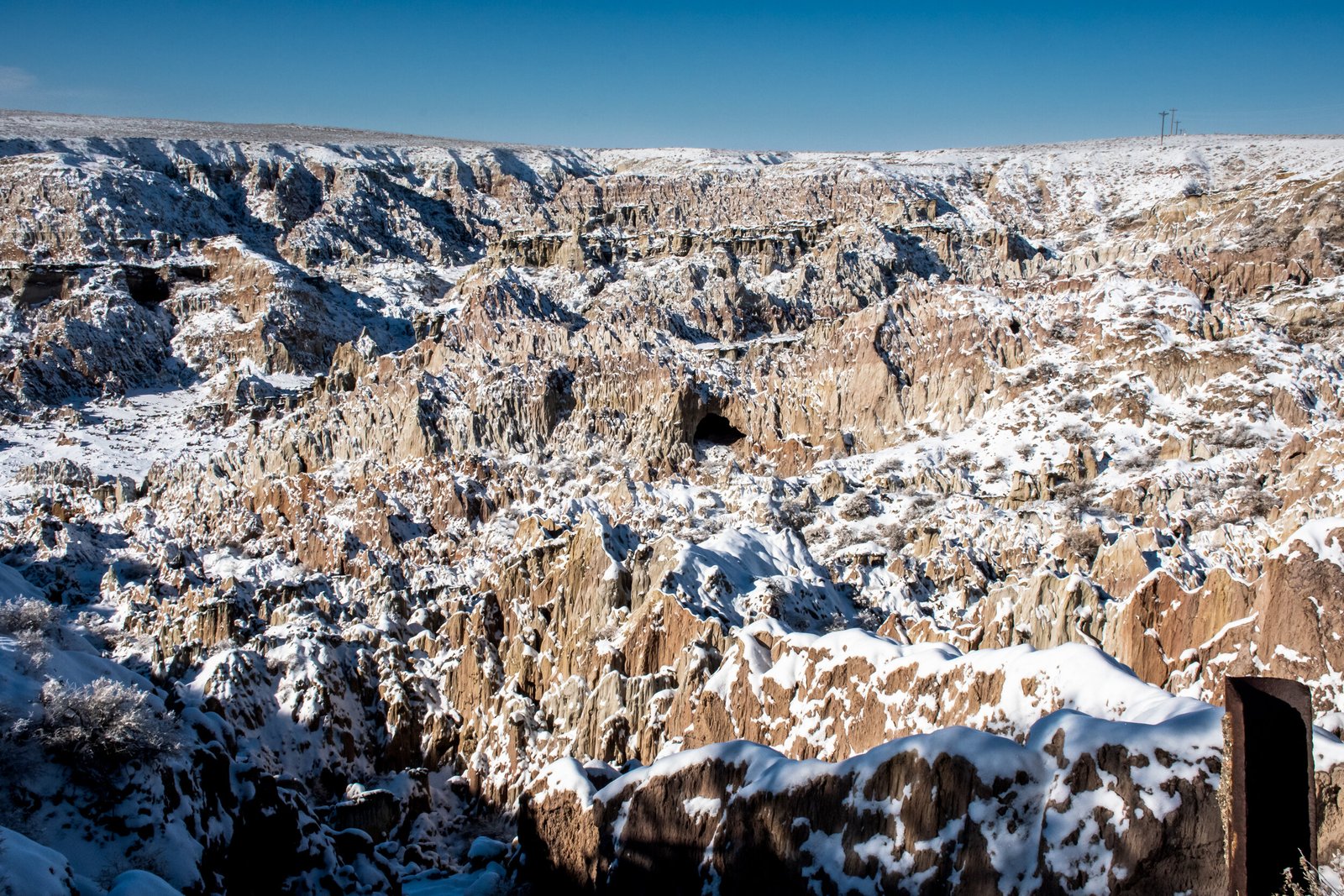
Hell's Half Acre is a 320-acre scarp about 40 miles west of Casper along US 20/26 in Natrona County. It has deep ravines, caves and eroded earth that exposes Wind River Formation rock, and it is fenced with no public access to the cliff edge. For a contractor, that is a warning about the ground nearby. Soil in this kind of setting erodes, slumps and opens in ways that a flat lot in town never does.
The roadside also has a history of small commercial use. A restaurant and motel on the ravine closed in 2005 and were later demolished. As of July 2021, a gravel lot with a closer view was accessible through open fence gates. Sites like that tell us what to expect when an owner calls about a roadside parcel: old buildings, uncertain boundaries, weak ground and a long supply line. We plan the work with a safety orientation, a permit to work and a close look at the edge.
The long stretch west of town
The highway west from the Events Center interchange is the supply line. Everything we need for a job here, from rock and base to concrete and fuel, makes the same drive. Crews are staged at the start of the week and stay on site, or they return each night, depending on the scope. We settle this at bid time.
Between town and the scarp there is open country and long visibility. That helps with trucking and hurts in wind. We watch gusts and set limits for crane picks and tall equipment. We also coordinate with other highway users, since oversize loads and tourists share the road. If your project sits in this stretch, tell us which direction deliveries will come from and which gates are available.
Weather and distance set the calendar
The schedule here is built around weather windows. Earthwork and paving want dry, unfrozen ground. Concrete wants warmth or protection. We stage work to take advantage of good days and keep a short list of tasks that can proceed on bad ones. Mobilization is expensive, so we try to finish a phase before we leave.
Deliveries must be tight. A late truck on a 40-mile run is a lost half-day. We check ready-mix batching times, confirm the road, and have a backup plan if a pour must stop. Materials we can store, such as base rock, pipe, fence and rebar, come early and wait in a staging area behind a gate.
Work we take on at remote roadside sites
Scope falls into four groups. Clearing and grading for gravel lots and truck parking. Fencing and gates for safety and security. Small buildings and pads for equipment or storage. And demolition and cleanup of old structures. For the last, a demolition services plan covers asbestos and lead testing, utility cut-off, controlled removal, debris hauling and site restoration.
Roadside parcels often have foundations, septic systems, wells and buried tanks left from earlier uses. We locate them, document them and deal with them under the proper permits. A parcel that looks like gravel can hide a basement. Our teams probe and test before heavy equipment crosses an unknown area.
Eroding ground and the edge
The scarp shows what the ground can do: deep ravines, caves and eroded earth. On a site near an edge, we keep equipment back from the lip, set a stand-off distance from the engineer and mark it with fence and flagging. Surface water is directed away from the edge, not toward it, because concentrated runoff cuts ravines. Our fencing and security work is both a barrier and a rule.
A geotechnical investigation is wise for anything heavier than a gravel lot. Weak or erodible layers affect footing depth, slope grading and drainage. We design the pad and the drainage together so water has a path that does not undermine the base. When ground conditions are uncertain, we say so and recommend the study before we price the structure.
Related work for roadside owners
Many owners need parking and staging for trucks. A stabilized parking lot with a proper base, crown and edge drainage holds up under loaded rigs. Add lighting, fencing and a gate, and the lot becomes a secure place for fleets and trailers. This suits logistics and distribution operators who need a stop between town and the west.
Others need a small shop or storage building. We build metal buildings on engineered foundations, with a slab that fits the equipment and doors sized for the largest vehicle. We include power, water or a well, and a septic arrangement if the parcel needs one, and we lay out the permits in order.
Safety in a remote place
Remote means help is far away. We plan for that. Every crew member completes a safety orientation. We carry first aid supplies, keep a vehicle ready and agree on a rally point. Communication coverage may be thin, so we use radios and check-in times. Lone work is not allowed.
Hazards include wind, lightning, cold, unstable edges and highway traffic. Each has a rule. Daily hazard reviews happen before any work starts. Anyone can call a stop. The permit to work lists the task, the people, the controls and the end condition, and nothing starts without it.
Price the miles honestly
Send us the parcel, the highway access and what you want built. We will check the ground, count the miles and bring back a plan with the distance shown. For work closer to town, start at our Casper page.
Common Questions
How far out do you work from Casper?
We work across Natrona County, including sites about 40 miles west along US 20/26. Distance affects price through travel time, mobilization and freight, and we itemize it in the bid.
Can you demolish old roadside buildings?
Yes. A demolition plan covers hazardous material testing, utility disconnects, controlled removal, debris disposal and site restoration. We locate foundations, wells, septic tanks and buried fuel tanks before heavy equipment moves.
Is the ground near the scarp safe to build on?
Not without investigation. The area has deep ravines, caves and eroded rock, and access to the cliff edge is fenced off. We recommend a geotechnical study for any structure and set stand-off distances for equipment.
What is the cheapest useful improvement on a roadside parcel?
Usually a graded, drained and surfaced lot with a gate and fence. It puts the property to work for trucks and storage, and it can grow into a building site later. We design the drainage first so the surface lasts.
Do you schedule work around the weather?
Yes. We plan earthwork and paving for dry, unfrozen months, place concrete in protected conditions and keep a standby list for bad days. Wind limits apply to lifts.